
Aimed at integrating cutting-edge psychological science into the classroom, columns about teaching Current Directions in Psychological Science offer advice and how-to guidance about teaching a particular area of research or topic in psychological science that has been the focus of an article in the APS journal Current Directions in Psychological Science.
Eisenberger, N. I., Noble, R., & Naclerio, M. (2026). The benefits of prosocial behavior for mental and physical health: A neuroscience approach. Current Directions in Psychological Science.
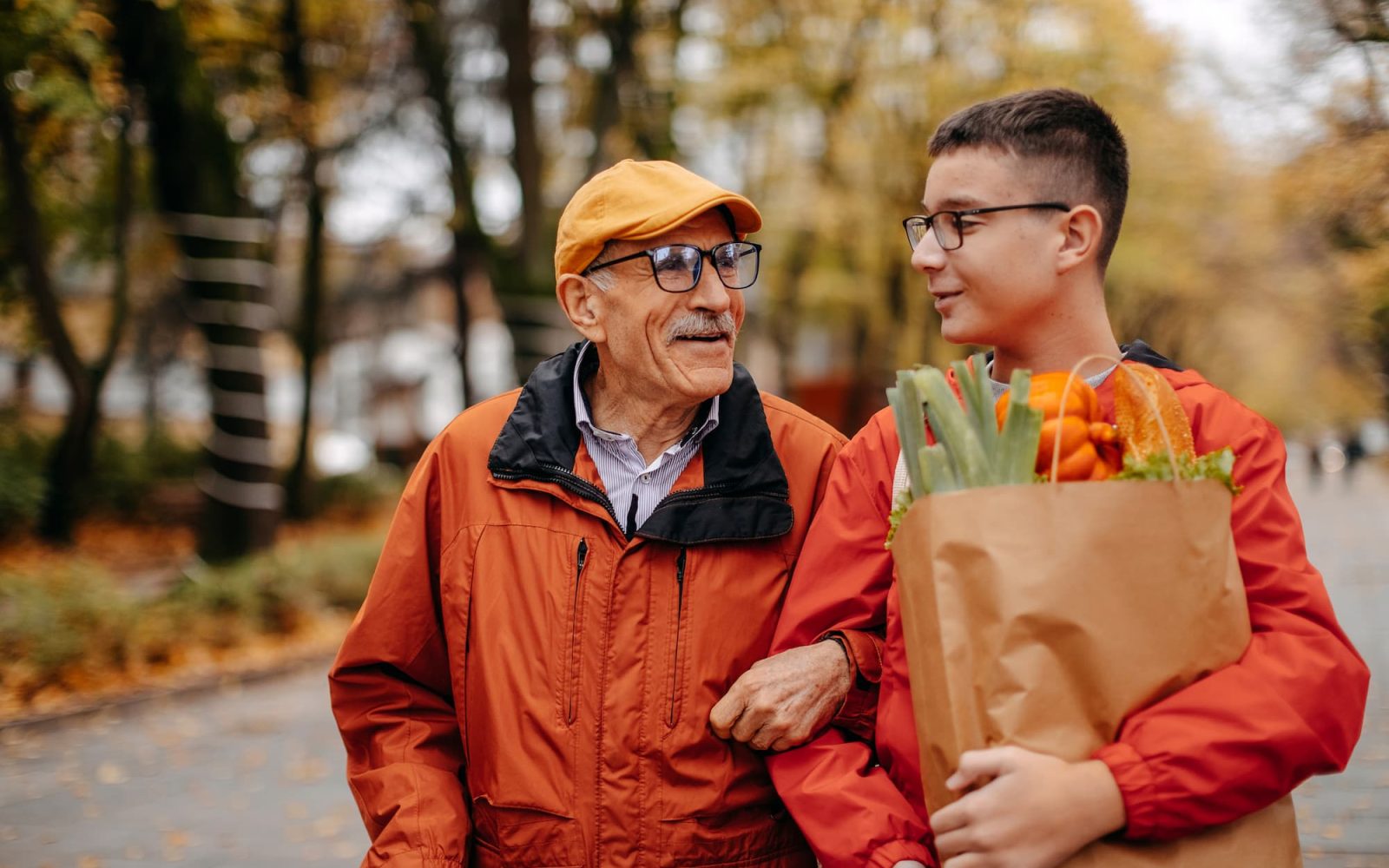
Would you rather help your friend study for an upcoming exam or vegetate in bed after a long day? What if helping your friend turns out to be a good way to help yourself, too? Though supporting your friends might strengthen your social connections, the effects of your helping behaviour on your own health and well-being might not be as obvious.
Plenty of correlational research suggests that people who engage in more prosocial behaviour have lower mortality and better mental and physical health outcomes (Brown & Brown, 2015; Nichol et al., 2024). But which comes first? In their new Current Directions article, Eisenberger and colleagues argue strongly for one direction: Prosocial behaviour (defined as any action intended to benefit someone else) can enhance the giver’s mental and physical health. As to how this works in the brain, they propose that mammals have a caregiving system that evolved to allow us to care for our offspring. Part of this system has been co-opted to allow us to care for non-kin, too.
Among the many neural regions in this caregiving system, two are relevant for broad prosocial behaviour: the ventral striatum (VS) and the septal area (SA; Eisenberger et al., 2026). The VS is part of the dopaminergic reward circuit and is responsible for reinforcing prosocial behaviour. The SA, on the other hand, has inhibitory connections with the amygdala, which is involved in threat or stress responding. So if you activate the SA, it will inhibit the amygdala, and that will dial down the giver’s physiological stress response. This reduced stress allows an organism to prioritise the needs of others.
The APS Mentorship Program brings together psychological scientists from around the world and across career stages and industries. Learn more and register today!
In animal models, when the SA is activated, it suppresses fear-related responses in rat mothers, which enables them to prioritize caregiving even in a threatening situation (Stack et al., 2002). To investigate this system in humans, Inagaki and Eisenberger (2012) put women in an fMRI scanner and told them their romantic partners were going to receive some mildly painful electric shocks. In some trials, the women were allowed to help their partners cope with this stress by holding their hands. The women showed greater activity in the VS and SA during these trials than on trials in which they didn’t get to help their unfortunate partners. What’s more, just as in animal models, when the female participants were able to help, they showed lower amygdala activity. Supporting their loved one decreased their own threat response.
Because the SA inhibits the amygdala’s stress response, Eisenberger and colleagues (2026) propose that prosocial behaviour should also improve stress-related physical health. In one study, they induced stress in undergraduate students by telling them to give a speech or solve complex math problems in front of evaluators (Lazar & Eisenberger, 2022). The researchers then randomly assigned the students to either give a gift card to someone else, receive a gift card for themselves, or complete a no-gift-card neutral task (the manipulation phase). Afterward, students completed a set of questionnaires (the recovery phase). The team monitored each person’s heart rate and blood pressure throughout the experiment. Lazar and Eisenberger (2022) found that of the three groups, the physiological parameters of the group that gave to another person recovered faster during the recovery phase. Interestingly, the three groups did not differ on subjective levels of stress during the recovery phase. So, it seems as if acts of giving can affect the body’s physiological stress response, but not necessarily people’s conscious experiences of stress. Other studies also demonstrate that engaging in acts of kindness toward others reduces inflammatory responses in the giver (Moieni et al., 2020; Nelson-Coffey et al., 2017).
It’s not just physical health that is positively impacted; helping improves people’s mental health, too. When people spend money on others (e.g., buying goody bags for children in need, donating part of a payment to a charity of choice, etc.), they experience more positive emotions than if they spend the same money on themselves (Aknin et al., 2022). Such benefits were especially strong when people got to choose how and who to help. Other studies found that compared to controls, when people performed acts of kindness for others, they reported feeling lower levels of anxiety, depression, and loneliness (Lim et al., 2025; Naclerio et al., 2026; Zhang et al., 2025).
What distinguishes kind acts toward others from other positive behaviours? Both prosocial acts and self-kindness acts can lead to increases in positive emotions. But helping others provides a sense of meaning, social connection, and purpose that is not produced by doing nice things for oneself (Regan et al., 2023). So, if your goal is to reduce your own stress and inflammation markers and improve your mental health, consider helping your friend study for their exam—even if it feels more effortful for you in the moment.
Student Activity
Introductory psychology activity: Act out the prosocial brain.
Invite five students to the front and assign them roles:
- Person in need
- Helper
- Helper’s ventral striatum (VS)
- Helper’s septal area (SA)
- Helper’s amygdala
Helper brain areas stand behind the helper.
Begin with the person in need displaying distress. Then ask the amygdala to step forward and bounce on their toes—representing amygdala activation and detection of a stressful situation.
Now have the helper choose to provide support (they can link arms with the person in need). The VS and SA now step forward and start bouncing on their toes. At the same time, the SA pushes the amygdala down. Explain that the VS makes us feel good when doing prosocial behaviour and the SA dampens stress response by lowering amygdala activity.
Ask students to get into small groups to discuss the following prompts:
- How might the SA, VS, and amygdala work together during prosocial behaviour?
- How would reduced amygdala activity feel in the body?
- Beyond feeling good about their actions, what psychological consequences can the giver experience that will encourage them to give more in the future?
Upper year activity:
- Present students with several pairs of actions: one prosocial and one self-kindness option (see PowerPoint for examples and questions). For each pair, ask students to rate how enjoyable, meaningful, and effortful they expect each action to be. Discuss how prosocial behaviour can at first feel effortful but can lead to increased meaning, connection, and purpose.
- Eisenberger et al. (2026) suggests that helping has inherent rewards. Do you find yourself helping others for the purpose of gaining these benefits, or are they just a pleasant consequence? Help students separate motivations for a behavior and consequences of that behavior.
Researcher Teacher-Feature
Almost all university researchers are teachers, too. That’s the idea behind this new feature of Teaching with Current Directions. We invite the scientists featured in our column to answer questions about their own teaching. We hope that this new feature inspires you and sparks your curiosity! The interviews may be summarized and edited for clarity.
In this month’s column, we are lucky to hear from all three coauthors! Russell Noble and Maria Naclerio are both PhD students working with Dr. Eisenberger in the Social and Affective Neuroscience Lab at UCLA.
What’s your institution and which courses do you teach the most? How large are your classes?
Dr. Eisenberger: The main course that I teach right now is an undergraduate lecture course on the psychology and neuroscience of emotion. This is a 200-person class.
What’s one of your favorite courses, topics, or skills to teach? Can you provide a specific example of a favorite activity?
Dr. Eisenberger: I love teaching my emotion class. One of my favorite activities is to have students keep a journal of their emotions for the first 6 weeks of class. This way, they can reflect on how their own experiences of emotions line up with the theories of emotions that they are learning about in class.
What aspect of teaching do you like the best? Can you tell us a story about how you approach this aspect of teaching?
Dr. Eisenberger: I love teaching students about psychological topics that are relevant to their own lives—such as the neuroscience of rejection or connection, or the development of attachment and relationship experiences. I try to do this through connecting real-life experiences with animal and human research that helps to clarify these experiences and why they “feel” the way they do.
Maria Naclerio: My favorite aspect of teaching is discussing ideas with students and learning from them. As a psychologist, the questions that we ask are often inspired by our own experiences and frameworks, so I always love hearing from other perspectives. Office hours and small group discussions seem to be the best ways to facilitate these types of conversations.
What comes to mind when you reflect on the intersection of teaching and research?
Dr. Eisenberger: One of the things that makes being a university professor so satisfying is that you don’t just get to teach the latest research, but you get to create it as well. I absolutely love having a question about the nature of human experience, answering that question by designing and running a study, discovering something new about how the mind works, and then getting to teach that new information to our undergraduates.
Russell Noble: What comes to my mind the most is that both require turning complicated or messy ideas into something palatable for someone that isn’t inside my head. While research allows for more complexity and flexibility, I’ve found that explaining a research idea to a student in a class I TA for forces me to explain it in basic principles and can reveal some assumptions or steps that I’m skipping.
Feedback on this article? Email [email protected] or login to comment.
Additional References
Additional References
Aknin, L. B., Dunn, E. W., & Whillans, A. V. (2022). The emotional rewards of prosocial spending are robust and replicable in large samples. Current Directions in Psychological Science, 31(6), 536–545.
Brown, S. L., & Brown, R. M. (2015). Connecting prosocial behavior to improved physical health: Contributions from the neurobiology of parenting. Neuroscience & Biobehavioral Reviews, 55, 1–17.
Inagaki, T. K., & Eisenberger, N. I. (2012).Neural correlates of giving support to a loved one. Psychosomatic Medicine, 74(1), 3–7.
Lazar, L., & Eisenberger, N. I. (2022). The benefits of giving: Effects of prosocial behavior on recovery from stress. Psychophysiology, 59(2), Article e13954.
Lim, M. H., Hennessey, A., Qualter, P., Smith, B. J., Thurston, L., Eres, R., & Holt-Lunstad, J. (2025). The KIND Challenge community intervention to reduce loneliness and social isolation, improve mental health, and neighbourhood relationships: An international randomized controlled trial. Social Psychiatry and Psychiatric Epidemiology, 60, 931–942.
Moieni, M., Irwin, M. R., Seeman, T. E., Robles, T. F., Lieberman, M. D., Breen, E. C., Okimoto, S., Lengacher, C., Arevalo, J. M. G., Olmstead, R., Cole, S. W., & Eisenberger, N. I. (2020). Feeling needed: Effects of a randomized generativity intervention on well-being and inflammation in older women. Brain, Behavior, and Immunity, 84, 97–105.
Naclerio, M., Lazar, L., Hornstein, E. A., & Eisenberger, N. I. (2026). Exploring the effects of prosocial and self-kindness interventions on mental health outcomes. Emotion, 26(1), 14–24.
Nelson-Coffey, S. K., Fritz, M. M., Lyubomirsky, S., & Cole, S. W. (2017). Kindness in the blood: A randomized controlled trial of the gene regulatory impact of prosocial behavior. Psychoneuroendocrinology, 81, 8–13.
Nichol, B., Wilson, R., Rodrigues, A., & Haighton, C. (2024). Exploring the effects of volunteering on the social, mental, and physical health and well-being of volunteers: An umbrella review. VOLUNTAS: International Journal of Voluntary and Nonprofit Organizations, 35(1), 97–128.
Regan, A., Margolis, S., Ozer, D. J., Schwitzgebel, E., & Lyubomirsky, S. (2023). What is unique about kindness? Exploring the proximal experience of prosocial acts relative to other positive behaviors. Affective Science, 4, 92–100.
Stack, E. C., Balakrishnan, R., Numan, M. J., & Numan, M. (2002). A functional neuroanatomical investigation of the role of the medial preoptic area in neural circuits regulating maternal behavior. Behavioural Brain Research, 131(1–2), 17–36.
Zhang, Y., Jiang, Q., Luo, Y., & Liu, J. (2025). Can one donation a day keep depression away? Three randomized controlled trials of an online micro-charitable giving intervention. Psychological Science, 36(2), 102–115.