
Global biases • Breaking down double standards • Building cross-cultural collaborations
Quick Take
- There is a persistent double standard in how research outside of the Global North is reviewed and perceived; samples from countries in the Global North still dominate the literature.
- Fundamental changes to journal practices, bringing more global scholars to leadership roles, and conducting more equitable collaborations with researchers in underrepresented countries may help to address biases.
- Researchers share the lessons they’ve learned in conducting international, cross-cultural research, and provide advice for those looking to embark on their own global collaborations.
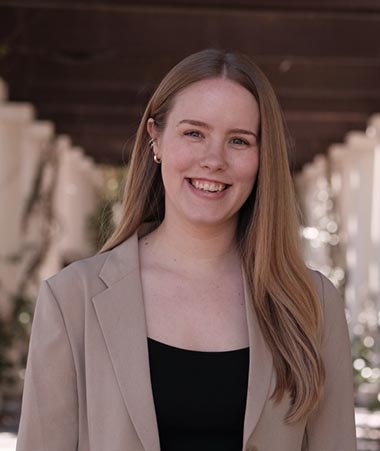
During her PhD, organizational psychologist Claire Smith learned about a double standard that was persistent in psychological science: Research from the Global South regions that centered underrepresented samples faced greater scrutiny by reviewers, compared to similar research from regions in the Global North.
Smith was trained in the United States and now works at the University of South Florida. When she started conducting her own international collaborations, she also began witnessing firsthand the biases and double standards her colleagues faced.
“If [the researchers] work in another country, the more dissimilar [the country] is to the United States, the more pushback and obstacles I see,” Smith said.
For instance, Smith recounted the challenges that she and a colleague—based in the United Arab Emirates—faced when working to publish findings from research conducted in the Middle East. Reviewers asked for more context on where the research was conducted in the title of the paper and in the limitations, as samples outside of the Global North were seen as local and less applicable to the rest of the world. But when submitting studies with similar samples and protocols from the United States, Smith has encountered few of these requests.
Although the importance of international research is increasingly recognized in psychological science, experiences like Smith’s show that biases, prejudices, and barriers for underrepresented countries are often implicit and deep-seated. As a result, double standards from journals and funders become an impediment to researchers studying populations outside of the Global North, inhibiting the inquiry of human experiences across cultures and the establishment of context-driven psychological theories, despite widespread agreement about the value of doing so.
“I’ve had many researchers from the Global South telling us how difficult it was to be a part of science, of psychology, in the world, and how hard it is to do research in their countries,” said APS Fellow Silvia H. Koller, professor emerita at the Federal University of Rio Grande do Sul, who is co-editing a forthcoming book called Voices of Change: Pioneering Psychology in the Global South. “There was a shared understanding among many of us in the Global South that publishing in leading journals based in the Global North was extraordinarily difficult.”

Global biases
The WEIRDness of psychological research—how the majority of studies focus on a small subset of people in the Global North—has long been discussed in social science. The term WEIRD (Western, educated, industrialized, rich, and democratic) was coined in 2010 by researchers Joseph Henrich, Steven Heine, and Ara Norenzayan. The descriptor attracted much attention, leading to a number of papers sounding the alarm on how samples in psychological science are biased toward one group (e.g. Nielsen et al., 2017). Some of these papers have garnered thousands of citations. Recent research has pushed to expand discussions beyond the term, arguing, for example, that the term itself has centered Western psychology (Bettache, 2026).
“You might make the case that obviously the field has received the message,” said Roman Stengelin, a developmental psychologist at the Max Planck Institute for Evolutionary Anthropology. “But we wanted to see if that that has caused change, in the sense that people and journals are more appreciative of sampling diversity.”
A new paper in Perspectives in Psychological Science by Stengelin and his colleagues shows that, in fact, sample biases still persist in developmental psychology. By looking at studies published in five leading psychological journals and assessing the origin of the samples, researchers concluded that Global North countries are still mostly overrepresented. Further, the study found that underrepresented communities often contained more cultural contextualization than overrepresented ones, highlighting a dual standard in what information is required from authors outside the Global North.
For these findings, Stengelin and colleagues analyzed more than 2,600 studies published between 2016 and 2020. They recorded the countries each study sampled and collected publicly available statistics and information on these countries to gain a sense of their culture, beyond whether they are included under the WEIRD umbrella. This included population size, education indices, gross domestic product values, urbanization, household size, religiosity, and more.

In the analysis, Stengelin said he and his colleagues found that “there persists a massive overrepresentation of children from certain societies,” namely societies that sat at the extremes of the cultural metrics measured. For instance, most children sampled in the analyzed papers came from countries with small household sizes, meaning that the children usually had very few siblings. The paper also found that studies often included countries where children predominantly grew up in urban areas, were formally educated, and had little religiosity.
This means developmental psychology is missing much of what children are experiencing in the majority of the world. “[Many] children across the globe are growing up in families that are extended, where children are exposed to siblings in their daily lives, and the children that we’re testing don’t have that experience,” Stengelin noted.
The study’s authors also assessed how culture was contextualized in each paper, looking for language related to socioeconomic status, ethnicity, or the country overall. As expected, research coming out of common convenience samples had little mention of culture, whereas samples from underrepresented communities had an abundance of context, with identifiers often present in titles, abstracts, and throughout the manuscript.
“There is a dual standard in that if research comes from traditionally overrepresented communities, it is much less likely to engage with culture, compared to research from communities that are much less represented,” Stengelin said. A part of the problem, he noted, may be how psychological researchers are often inattentive to culture.
“I think the field is so full of convenience samples, and is so full of science that pays little attention to culture, that it’s very easy for us to not see the culture that is hiding in plain sight,” Stengelin said. “And so whenever there is research from other communities, especially research from the majority world, from the Global South, all of a sudden there is attention to culture because we all of a sudden take on this bird’s eye perspective and see, oh, this is something different.”
These findings of bias are not new. In fact, Stengelin said that there is usually a paper every year or so highlighting the problem in research. “It appears that the field doesn’t want to change at this stage,” he said. “I feel this is not an issue of a lack of understanding.”
Breaking down double standards
For Silvia Koller, the biases of research translate into experiences of prejudice experienced throughout her career. At her first international conference, Koller had researchers dismiss her research, telling her that she didn’t know what she was talking about. When submitting her papers to well-known journals, she would get comments on the quality of her English and that she needed to include American coauthors, even though an American colleague was already listed. Countless times, reviewers asked for more details justifying why her studies focused on underrepresented communities in Brazil, even though those explanations were missing from similar papers by colleagues in Europe and the United States.
As a result, Koller spent much of her career fostering “internationalization”—finding ways to break down barriers for researchers in the Global South. That is a perspective she now brings as an APS board member. Psychological science, she argues, needs fundamental change, ranging from how we include scholars from historically excluded countries at conferences, to how journals review and assess manuscripts, to building reciprocal, equitable partnerships.
“There [needs to be] different levels of intervention,” Smith echoed.
During a panel at the 2026 APS Annual Convention, Smith discussed how journals could update their practices to include more global perspectives. Many journals are now collecting data on where in the world their submissions are coming from and are actively diversifying their editorial boards to include more voices from the Global South. That’s a good start, Smith said, as including more perspectives in higher-up positions shapes decisions on what kinds of research ends up in the journal itself.
“I think, or hope, we’re going to see [more diversity] reflected in the research,” she said.
Smith also added that there are ways that researchers, when acting as reviewers, can also adjust their biases. One way is asking for more context to be included in every study, not just the ones outside of the Global North.
“Improving representation requires more than collecting data in additional countries. It requires changes in who formulates research questions, who leads collaborations, whose concepts are cited, whose work is judged to have theoretical importance, and who occupies positions of editorial and institutional authority.”
APS Fellow and Board Member Silvia Koller
“[We should] hold manuscripts from different parts of the world to the same standard,” Stengelin emphasized. For instance, he noted that some journals now have a sociocultural policy where they require authors to provide cultural context in the abstract and, that overall, having dedicated sections to provide more cultural information could be a useful addition. Having specific reviewers assess cultural information could also help shift away from a double standard.
Outside of reviewing papers, Koller said that mentoring the next generation of scientists, particularly those from underrepresented regions, is important. Throughout her academic career, Koller always brought her students and collaborators to conferences and meetings. “I wanted them to be part of these associations,” she said. As a result, many in her network are now a part of committees, boards, and editorial teams, where they’re bringing their own background into the decisions made in these spaces. Eventually, this could help redefine what kinds of research are welcomed in psychological science.
Ultimately, Koller noted there needs to be a shift in how research in the Global South is produced. Oftentimes, Global North researchers come to these regions to diversify knowledge but only collaborate with local researchers for data collection. Integrating Global South scholars in the entire research process, from research question to theory formulation—and crediting the appropriate authorship for these contributions—should be increasingly emphasized, she said.
“Improving representation requires more than collecting data in additional countries,” Koller said. “It requires changes in who formulates research questions, who leads collaborations, whose concepts are cited, whose work is judged to have theoretical importance, and who occupies positions of editorial and institutional authority.”
Building cross-cultural collaborations
When Joshua Goh was a research assistant in Singapore in the early 2000s, he met Denise Park and Angela Gutchess for the first time. They came from the United States to Asia with a then-novel idea for a cognitive dataset: scan the brains of younger and older adults in both Singapore and the United States and see if there were any differences.

Cross-cultural research, Goh explained, was not very common at the time. “The very strong idea in psychology is that all the psychological processes and principles are universal,” he said. But Park and Gutchess had a different idea. What if there were cultural differences in how brains operate? What if psychological processes weren’t quite universal and science was missing that variation?
This early collaboration and dataset eventually birthed a number of papers, some of the first cross-cultural studies in cognitive science (Goh et al., 2007). Over the next couple of decades, Goh, Park, and Gutchess continued to collaborate, focusing on research comparing populations in East Asia and the United States and contributing to further understanding of aging, perception, and memory in two different cultural contexts.
Although this work has helped spark a growing body of international research within cognitive science, Goh said they weathered many challenges of doing cross-cultural work over the years. He and his colleagues are now sharing the lessons they learned in a new paper in Current Directions in Psychological Science to help other researchers diversify their own fields.
“We think [cross-cultural] data is important because it precisely challenges the idea that the same kind of cognitive effects we see in one group would be entirely replicated in another group, which may or may not be true,” said Goh, who is now at National Taiwan University. “We want to encourage people who are just on the edge [of wanting to do this sort of collaboration] to take the leap.”
In the new paper, Goh and colleagues outline how culture is becoming an increasingly prevalent dimension in psychological research, but studying culture and fostering international collaborations still face a number of difficult challenges.
In particular, the authors describe various research and methodological challenges, where assessment and measurement tools that make sense in one cultural context may not in another. For instance, participants in East Asian cultures tend to express depression through discomfort in their body rather than in emotional terms and may be more reluctant to talk about cognitive decline.
If your instrument is not tuned properly, “you might end up concluding that the whole Asian population basically has dementia, or the rates are higher than they should be,” Goh said. Including these nuances in the sampling protocol could help gather samples that are more representative of what’s really happening in the brain.
There are also many logistical challenges when working in an international team. Not only may researchers face time differences, skyrocketing costs, and difficulties sharing data, they may also have trouble convincing funding agencies to support a cross-cultural study in the first place. Funding mechanisms also vary widely between countries, creating an additional barrier.
“You have to collect data across two different political, administrative, cultural, and even financial contexts,” Goh said. “Especially for these cross-country, cross-cultural types of work, the logistics are a nightmare.”
One way to overcome this barrier and convince funding agencies is to focus on how cross-cultural research can contribute to a mechanistic understanding of the mind, rather than just a cultural one, Goh said. He added that having a good team, one that both melds scientifically and provides support, is imperative.
“I think it is absolutely critical because you will be burned out fighting the system,” Goh said. For him and his past collaborators, he said, “we’re more like friends than collaborators.”
Finding these relationships takes a bit of luck. Attending conferences, joining associations, or reaching out to Goh, his coauthors, and other scientists that have done international research can be a good place to start.
“Now is the time to start asking these questions,” Goh said. “My coauthors and I are more than happy to provide guidance if they need it.”
Back to top
Feedback on this article? Email [email protected] or login to comment.
References
Bettache, K. (2026). “WEIRDly exceptional”: Has cultural psychology reproduced what it sought to critique? Perspectives on Psychological Science.
Goh, J. O., Chee, M. W., Tan, J. C., Venkatraman, V., Hebrank, A., Leshikar, E. D., Jenkins, L., Sutton, B. P., Gutchess, A. H., & Park, D. C. (2007). Age and culture modulate object processing and object–scene binding in the ventral visual area. Cognitive, Affective & Behavioral Neuroscience, 7(1), 44–52.
Gutchess, A., Boduroglu, A., Chang, Y., Huang, C., & Goh, J. (in press). How to study cognition and cognitive neuroscience across cultures. Current Directions in Psychological Science.
Nielsen, M., Haun, D., Kärtner, J., & Legare, C. H. (2017). The persistent sampling bias in developmental psychology: A call to action. Journal of Experimental Child Psychology, 162, 31–38.
Stengelin, R., Neldner, K., Hornoff, L., Maurits, L., Petrović, L., Eirdosh, D., Fong, F., Hagen, P., Kisa, Y., Leisterer-Peoples, S., Michael, M. M. G., Vieira, W., Pope-Caldwell, S., & Haun, D. (in press). Bias at scale: Global disparities in the representativeness and contextualization of childhood research. Perspectives on Psychological Science.