Fighting Midlife Inertia and the Health and Self-Esteem Challenges That Come With It
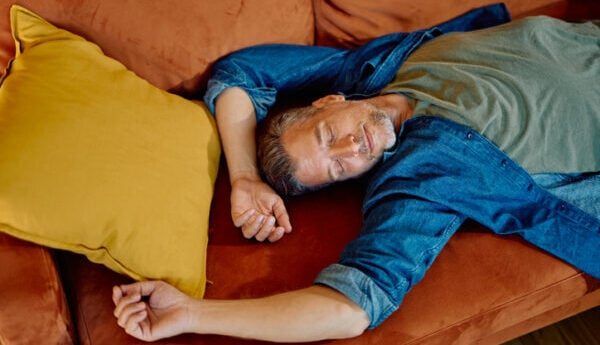
Having trouble getting your body to go from rest to motion? You’re probably dealing with midlife inertia.
For many men, midlife doesn’t arrive with a dramatic crisis. It arrives with a remote control.
One day you notice that your evenings look different than they used to.
- The gym bag stays in the closet.
- The bike collects dust in the garage.
- The softball league, hiking trips, and pickup basketball games gradually disappear.
Instead, it’s easier to sink into the couch, turn on the television, crack open a drink, and tell yourself you’ll get back to taking care of yourself tomorrow.
The problem is that tomorrow has a way of turning into next month, next year, even the next decade, or never.
Many men experience a period in midlife where motivation becomes harder to find. The drive that once pushed them to stay active, pursue goals, and invest in their health has faded.
They gain weight, lose strength, and watch their energy levels decline – consequently, self-esteem takes a hit, making it even harder to find the motivation to get back to it. This creates a cycle that’s difficult to break.
This phenomenon isn’t just about getting older. It’s often the result of what can best be described as midlife inertia – the tendency to stay where you are, even when you know movement and change would be good for you.
Understanding why this happens is the first step toward reversing it.
Why Midlife Inertia Happens
When men are young, life naturally creates momentum.
There are careers to build, relationships to establish, children to raise, and goals to pursue.
Every stage of life seems to present a new challenge that requires action. There’s a sense of forward movement, whether a man actively seeks it or not.
By midlife, many of those major milestones have already been achieved, and life becomes more stable and predictable. While stability can be rewarding, it can also reduce the urgency that once drove healthy habits and personal growth.
At the same time, the body begins changing.
- Recovery takes longer.
- Sleep becomes less reliable.
- Energy fluctuates.
- Muscle mass naturally decreases with age if it isn’t actively maintained.
A hard workout that once felt invigorating now feels exhausting.
Unfortunately, comfort becomes easier too.
- The couch is comfortable.
- Streaming services offer endless sports or other entertainment options.
- Food and groceries can be delivered.
- Alcohol can provide a temporary escape from stress and responsibility.
None of these things are inherently bad when they’re occasional and in moderation. The problem arises when comfort slowly replaces engagement, and you’re now fighting inertia.
There’s a lot of truth to the idea that a body at rest wants to stay at rest.
So, without realizing it, many men begin to organize their lives around avoiding discomfort rather than pursuing growth. Over time, the desire to stay comfortable becomes stronger than the desire to stay healthy.
The Psychology of Getting Stuck
One of the biggest misconceptions about midlife inertia is that it’s simply laziness.
Most men experiencing it aren’t really lazy.
They,
- Work hard
- Fulfill responsibilities
- Show up for their families
But when it comes to themselves, something feels different.
The issue is often psychological rather than physical.
Many men spend decades focused on external goals. Their identity becomes tied to providing, achieving, solving problems, and meeting obligations.
Once those demands begin to stabilize, they can find themselves asking,
“Now what?”
This can create a quiet emotional flatness.
Life isn’t necessarily bad – it just isn’t particularly exciting.
And let’s face it – many middle-aged men are tired.
These factors, combined with a lack of a sense of purpose or personal challenge, lead to a decline in motivation.
Exercise starts to feel optional, nutrition becomes less important, and personal growth slips down the priority list.
When a sense of progress disappears, people (especially men) often become passive, and that passivity creates a dangerous cycle.
- Less activity leads to lower energy
- Lower energy leads to less activity
Before long, men begin feeling like their backsides are stuck to the couch and the remote is just an extension of their hand.
The Couch, Beer, And Battle For Physical Health
One of the most overlooked aspects of midlife inertia is how seductive comfort becomes.
After a long day at work, most men know they would feel better after a walk, workout, or some form of physical activity. Yet many find themselves reaching for a beer and the remote instead.
Part of this is simple human nature. Physical activity requires effort. Drinking and TV don’t.
The challenge is that the rewards work in opposite ways.
Sitting and watching TV feels good in the moment and can be justified as “relaxing” or “unwinding,” but it often leaves a person feeling exactly the same – or worse.
While physical activity feels inconvenient and like a lot of work, it improves mood, energy, confidence, and health.
In midlife, the temptation to choose short-term comfort over long-term benefits can be overwhelming.
Alcohol can also become part of this pattern.
A couple of beers in the evening may begin as a way to unwind. Over time, however, drinking can become a routine.
And alcohol acts as an inertia amplifier.
It can,
- Interfere with sleep quality.
- Reduce motivation
- Increase calorie consumption
- Make physical activity less appealing.
Food often follows a similar path.
Many men begin rewarding themselves with convenience foods, larger portions, late-night snacks, and frequent takeout.
The issue isn’t that a man occasionally enjoys pizza, beer, or a lazy evening in front of the television. The issue is when these activities become the default setting for his life.
When movement becomes the exception and comfort becomes the norm, physical decline accelerates.
- Weight gain
- High blood pressure
- Low energy
- Joint pain
All become more likely.
Ironically, this makes exercise seem even less appealing, reinforcing the cycle.
The Emotional Toll And What It Does to Self-Esteem
Physical decline rarely stays just physical.
For many men, it also affects how they see themselves.
He may notice that his clothes fit differently. He may avoid photographs. He may feel self-conscious at the beach, in the bedroom, or even around friends.
These things quietly chip away at self-esteem.
The deeper issue is often not self identiy itself – it’s the feeling of losing control.
There’s a common unhealthy cycle to all of this.
Over time, the cycle creates a gap for many men between who they are and who they want to be, and that gap can feel impossible to bridge.
Breaking The Cycle Before It Becomes Your Identity
The biggest danger of midlife inertia isn’t weight gain or lower energy.
It’s the lie men start telling themselves.
- “I’m just getting older.”
- “I’m not the kind of guy who works out anymore.”
- “My best years are behind me.”
Those beliefs can become self-fulfilling.
So, what’s a guy to do?
Recognize that anything is better than nothing and start small.
- Take a walk
- Lift weights once or twice a week.
- Drink one or two fewer beers.
- Cook instead of order.
These small efforts create momentum through action without requiring a sense of wild inspiration or biting off too much at once.
The goal isn’t perfection – it’s to start using inertia as a tool.
Because while bodies at rest may stay at rest, bodies in motion tend to stay in motion. Every workout, healthy meal, and positive choice is a way of taking back control.
That’s ultimately what fighting midlife inertia is about – refusing to let comfort become the defining feature of the second half of your life.
Aging may be inevitable, but disengaging from life isn’t.
iStock image
Publisher: Source link