
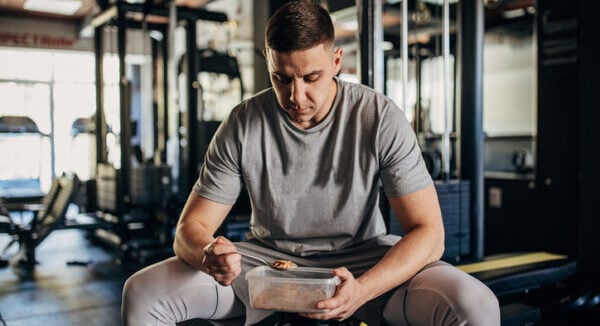
The pattern shows up constantly in wellness practice. A man decides to get serious about his health. He starts exercising more — hitting the gym, going for morning runs, adding weekend hikes. Simultaneously, he tightens his diet. Less carbs. More protein. Smaller portions. Cleaner eating.
Six weeks later, he feels worse than when he started.
He’s exhausted. He’s anxious. His sleep has fallen apart. He’s getting sick more often. And despite the extra effort, his body composition hasn’t changed the way he expected.
He assumes he needs to push harder. He doesn’t. He needs to eat more.
The Energy Availability Crisis No One Talks About
Exercise science has a concept called *energy availability* — the amount of fuel left for your body’s essential physiological functions after exercise has taken its cut. When that number drops too low, the body doesn’t simply run lean. It starts making difficult choices about where to redirect scarce resources.
The immune system is the first casualty. Recovery slows. Inflammation rises. Small injuries that would normally heal in days linger for weeks. Men who train hard on insufficient calories often notice they’re getting sick more frequently — colds that drag on, nagging muscle soreness that never quite resolves, a general sense of physical fragility.
Next come the hormones. And this is where it gets serious.
What Happens to a Man’s Hormones When He Doesn’t Eat Enough
The body’s response to inadequate fuel is elegantly designed — and completely counterproductive to your fitness goals.
The moment blood sugar drops, the adrenal glands release epinephrine and norepinephrine (adrenaline and noradrenaline). This is meant to help — the body is mobilizing its reserves, trying to stabilize your energy. But it produces that familiar anxious, shaky, irritable feeling. You’ve heard it called *hangry*. It’s actually your adrenals trying to compensate for a blood sugar crisis.
If low-calorie eating persists — especially low-carbohydrate eating — the adrenals escalate to cortisol. And cortisol, at chronically elevated levels, does something that should alarm any man focused on fitness: it instructs the liver to dismantle muscle tissue and convert the amino acids into glucose.
You read that correctly. When cortisol is chronically elevated, your body cannibalizes your own muscle to make energy. This is why people who are long-term chronically stressed, or who have been on corticosteroid medications, often develop a distinctive pattern — thin arms and legs, more weight around the center. The muscle is being taken apart and converted into sugar because the system has no other way to maintain blood glucose.
This is the exact opposite of what you’re working for in the gym.
The thyroid also takes a hit. When caloric restriction is sustained, the body adapts by slowing metabolism — which means suppressing thyroid function. You feel colder. Your energy drops further. Fat loss slows or stops entirely.
And for men specifically: the communication between the brain, the hypothalamus, and the testes begins to quiet. The reproductive axis, sensing that this is not a safe moment to allocate resources to testosterone production, pulls back. Testosterone drops. With it: energy, motivation, muscle synthesis, libido, and mood.
The Ancient Lens: Depleting Your Essence
Traditional Chinese Medicine has tracked this phenomenon for centuries, though it described it differently.
In TCM, *Jing* — often translated as “essence” — is the deep foundational vitality that governs longevity, reproductive capacity, physical strength, and mental resilience. The classical texts distinguished between the Jing you’re born with (Pre-Heaven Jing, inherited from your parents and finite) and the Jing you cultivate through food, rest, and right living (Post-Heaven Jing, continuously generated and replenished).
TCM physicians observed that overexertion without adequate nourishment was one of the fastest ways to drain the reserves of Post-Heaven Jing — and eventually draw down on the Pre-Heaven stores. The consequences they described read like a clinical description of overtraining syndrome and hormonal suppression: chronic fatigue, poor recovery, reproductive disruption, anxiety, insomnia, and accelerated aging.
The solution, then as now, was not less effort. It was *strategic restoration*. You do not deplete without replenishing.
The *Spleen* in TCM — the organ system governing the transformation and transportation of nutrients from food — must be fed well to generate the Qi that fuels everything else. If you eat too little, or eat poorly, the Spleen has nothing to work with. The downstream result is exactly what modern exercise physiology describes: a body running on stress hormones, breaking itself down to keep going.
Signs You May Be Underfueling
The pattern is more common than most people realize, and it doesn’t only affect extreme dieters. If you’ve increased your exercise without consciously increasing your food intake, you may be in a gradual deficit without knowing it.
Watch for:
- Persistent muscle soreness that doesn’t resolve with rest
- Insomnia or disrupted sleep — especially waking in the early hours
- Anxiety or irritability that feels unexplained
- Frequent illness or prolonged recovery from colds
- Flattening performance — workouts feeling harder despite consistent training
- Difficulty concentrating or unusual brain fog in the afternoons
- Low motivation or diminished drive
These aren’t signs you need more discipline. They’re signals that the system is under-resourced.
What to Do About It
The first step is recognizing that eating to support exercise is not indulgence — it is biological necessity. The body does not distinguish between “eating less to look better” and “starvation.” It responds the same way: with stress hormones, muscle breakdown, and metabolic suppression.
Practical starting points:
Don’t reduce food when you increase exercise. This seems obvious, but it’s remarkably common. If you’ve recently added workouts to your week, your caloric and carbohydrate needs have increased. Honor that.
Prioritize recovery nutrition. In the hours after training, your muscles need glucose to replenish glycogen stores and protein to begin repair. A post-workout meal or snack that includes both is not optional — it’s where adaptation actually happens.
Watch your carbohydrates specifically. Carbohydrate restriction under conditions of physical training is a direct pathway to adrenal stress and cortisol elevation. This doesn’t mean eating unlimited refined sugar. It means eating enough whole-food carbohydrates — root vegetables, legumes, whole grains, fruit — to support what you’re asking your body to do.
Protect your sleep. The adrenal-cortisol cascade from underfueling disrupts sleep architecture in precisely the way that most impairs recovery. If your sleep has worsened since you started training, underfueling is high on the list of suspects.
Ancient medicine was very clear: you cannot build strength on a depleted foundation. The goal of training is adaptation — and adaptation requires resources. Feed the work. Replenish what you spend.
Your hormones, your immune system, and your long-term health are depending on it.
—
iStock image
Disclaimer: This story is auto-aggregated by a computer program and has not been created or edited by healthlydays.
Publisher: Source link