Transitioning to Graduate School After Working as a Mental Health Professional
Blog
10.27.2026
Authored by César Molina Codecido
_This blog is part of__ADAA’s Early Career Professionals and Students SIG__International Scholars Blog Series__which highlights the experiences of early-career international scholars._
### Deciding to return to graduate school after several years of professional experience has been both challenging and incredibly rewarding.
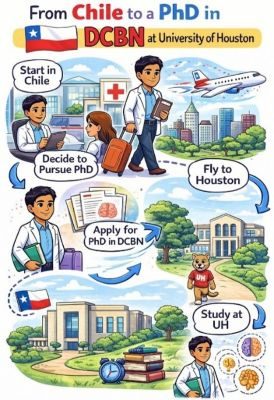
My name isCésar Molina Codecido, and I am from Chile. I am currently in my second year of the PhD Program in Developmental, Cognitive, and Behavioral Neurosciences (DCBN) at the University of Houston (UH).
After graduating in 2011 with a degree in psychology, I worked as a teaching assistant until 2016, maintaining an early connection to academia. During this period, I also completed a Master’s degree in Clinical Psychology, which allowed me to begin working in a public hospital in Chile in 2016. Since then, I have worked in that setting, later specializing in neuropsychology and conducting assessments for patients with possible dementia diagnoses.
My professional experience played a key role in shaping my research interests. While working with patients, I became aware of the difficulties involved in assessing bilingual individuals, which sparked my interest in this area and ultimately motivated me to pursue research.
This is not my first time being an international student. In 2019-2020, I pursued a Master’s degree in Neuropsychology in Spain, supported by my hospital through a study leave. After completing it, I returned to my clinical work in Chile. I am currently on a similar leave from my hospital position to pursue my PhD, which will allow me to return to the same institution and apply the knowledge I gain in neuropsychology and bilingual populations.
Before coming to the United States, I was in a stable professional environment. I regularly attended conferences as a presenter, sharing my work in neuropsychology and dementia, and had built a strong reputation among colleagues and supervisors. Transitioning from that context to a new academic environment has required significant adjustment. This transition to my PhD has been particularly demanding, as it involves not only returning to student life but also adapting to a different language and culture. Moving to a setting where I am not yet known, and where I must navigate language barriers, has required me to start over in many ways. Even everyday tasks can become unexpectedly complex procedures that might take minutes in my home country can take days as I learn how systems work and whom to contact. This shift has been both humbling and enriching.
Adapting to graduate school in a new country has also been challenging, especially in terms of language. Studying statistics, reading scientific articles, and participating in academic discussions in English represents a significant shift from doing so in Spanish. Cultural adaptation has also played an important role: small everyday interactions remind me that I am essentially starting over. At the same time, people have been welcoming and supportive, which has made the transition easier.
Another major change has been my daily routine. I have gone from evaluating patients and attending professional meetings to focusing on coursework, research training, and building new academic relationships. My PhD classmates have been a fundamental source of support during this transition, and interactions with professors and program staff have facilitated both integration and learning. University life has also allowed me to engage with diverse perspectives and cultures, enriching my experience in ways that would not have been possible in Chile.
Currently, I work as a Teaching Assistant (TA) while developing my research interests. I am in the process of defining my research focus, exploring different approaches to studying bilingualism and identifying questions that align with my background. At the same time, I have maintained contact with my hospital in Chile, which allows me to reflect on how the knowledge I am acquiring can be applied in my clinical context. When I return to Chile with a PhD, I will need to complete additional steps to validate my degree, such as translating my research and registering it with a university. Although this process requires effort, it is feasible and will allow me to continue practicing with the appropriate accreditation, unlike my degree from Spain, which had a direct recognition agreement.
Once this process is completed, I plan to return to my position in Chile while also developing an academic career as a researcher. I aim to contribute to the study of bilingualism in Latin America by building collaborative networks across the region. Teaching will remain an important part of my professional path, and I strongly believe that research should be closely connected to real-world contexts. In this sense, continuing my clinical work will help inform and strengthen my academic contributions.
In summary, being an international student in the United States has involved challenges different from those I experienced in Chile or Spain, particularly regarding language and cultural differences. It has been a demanding journey, but one filled with learning and experiences that have enriched me both professionally and personally. To those considering a PhD abroad, I would say: the challenges are real, but every effort brings rewards that go far beyond academic knowledge.
For me, this journey is not only about personal and professional growth, but also about preparing to contribute meaningfully to my field and to the community I hope to serve when I return home.

César Molina-Codecido
César Molina-Codecido
César Molina holds a bachelor’s degree in Psychology and is a licensed clinical psychologist in Chile, with a specialization in neuropsychology from Spain. He has experience in academic, governmental, and healthcare settings, including neuropsychological assessment of dementia and other neurodegenerative …
You Might Be Interested In
#### ADAA Blog Content and Blog Comments Policy
ADAA provides this Website blogs for the benefit of its members and the public. The content, view and opinions published in Blogs written by our personnel or contributors – or from links or posts on the Website from other sources – belong solely to their respective authors and do not necessarily reflect the views of ADAA, its members, management or employees. Any comments or opinions expressed are those of their respective contributors only. Please remember that the open and real-time nature of the comments posted to these venues makes it is impossible for ADAA to confirm the validity of any content posted, and though we reserve the right to review and edit or delete any such comment, we do not guarantee that we will monitor or review it. As such, we are not responsible for any messages posted or the consequences of following any advice offered within such posts. If you find any posts in these posts/comments to be offensive, inaccurate or objectionable, please contact us via email at [email protected] and reference the relevant content. If we determine that removal of a post or posts is necessary, we will make reasonable efforts to do so in a timely manner.
ADAA expressly disclaims responsibility for and liabilities resulting from, any information or communications from and between users of ADAA’s blog post commenting features. Users acknowledge and agree that they may be individually liable for anything they communicate using ADAA’s blogs, including but not limited to defamatory, discriminatory, false or unauthorized information. Users are cautioned that they are responsible for complying with the requirements of applicable copyright and trademark laws and regulations. By submitting a response, comment or content, you agree that such submission is non-confidential for all purposes. Any submission to this Website will be deemed and remain the property of ADAA.
The ADAA blogs are forums for individuals to share their opinions, experiences and thoughts related to mental illness. ADAA wants to ensure the integrity of this service and therefore, use of this service is limited to participants who agree to adhere to the following guidelines:
1. Refrain from transmitting any message, information, data, or text that is unlawful, threatening, abusive, harassing, defamatory, vulgar, obscene, that may be invasive of another ‘s privacy, hateful, or bashing communications – especially those aimed at gender, race, color, sexual orientation, national origin, religious views or disability.
Please note that there is a review process whereby all comments posted to blog posts and webinars are reviewed by ADAA staff to determine appropriateness before comments are posted. ADAA reserves the right to remove or edit a post containing offensive material as defined by ADAA.
ADAA reserves the right to remove or edit posts that contain explicit, obscene, offensive, or vulgar language. Similarly, posts that contain any graphic files will be removed immediately upon notice.
2. Refrain from posting or transmitting any unsolicited, promotional materials, “junk mail,” “spam,” “chain mail,” “pyramid schemes” or any other form of solicitation. ADAA reserves the right to delete these posts immediately upon notice.
3. ADAA invites and encourages a healthy exchange of opinions. If you disagree with a participant ‘s post or opinion and wish to challenge it, do so with respect. The real objective of the ADAA blog post commenting function is to promote discussion and understanding, not to convince others that your opinion is “right.” Name calling, insults, and personal attacks are not appropriate and will not be tolerated. ADAA will remove these posts immediately upon notice.
4. ADAA promotes privacy and encourages participants to keep personal information such as address and telephone number from being posted. Similarly, do not ask for personal information from other participants. Any comments that ask for telephone, address, e-mail, surveys and research studies will not be approved for posting.
5. Participants should be aware that the opinions, beliefs and statements on blog posts do not necessarily represent the opinions and beliefs of ADAA. Participants also agree that ADAA is not to be held liable for any loss or injury caused, in whole or in part, by sponsorship of blog post commenting. Participants also agree that ADAA reserves the right to report any suspicions of harm to self or others as evidenced by participant posts.
Take Action
Find Help. Learn More. Support ADAA.

Donate Today
Your support changes lives. Thank you!
Learn More
Get Involved Today
Share your personal story.
Start a fundraiser.
Shop to support our mission and more.
Learn More
ADAA’s Find Your Therapist
ADAA’s Find Your Therapist Directory connects YOU with licensed mental health professionals who are experts in anxiety, depression, OCD, PTSD and co-occurring disorders.
Learn More
Triumph – Learn, Share Your Story, Access Resources
ADAA’s free monthly newsletter for our public community. Subscribe today!
Subscribe
Free Peer to Peer Support Communities
ADAA’s four free online peer-to-peer communities for people suffering from mental health disorders provides a safe space for support, sharing experiences, and connecting with others.
Learn More

ADAA Self-Help Books – Bookstore/Reading List
Explore self-help and research-focused mental health books focusing on anxiety disorders and depression written by ADAA mental health experts. Purchases through Amazon benefit ADAA.
Learn More
Publisher: Source link