The Key to Overcoming Panic Attacks

Skip to main content
ADAA and Lancôme Launch Global “I’m Fine” Initiative to Break the Silence on Women’s Mental Health
# Anxiety & Depression Association of America Triumphing Through Science, Treatment, and Education
About ADAA
About Us
ADAA’s Impact, Strategic Plan, and Finances
ADAA’s Mission/Vision and History
ADAA’s 2025-2028 Strategic Plan
ADAA’s Board of Directors
ADAA’s Team
Join the ADAA Team
ADAA’s Partners
Advertise with ADAA
Donating to ADAA
Contact ADAA
News & Media
Newsroom
Announcements
Members in the News
Members Research News
Newsletter Signups
For Professionals
For the Public
Ways to Give
Ways to Give
Donate Online
Matching Gift Program
Share Your Story
Events
Find Your Therapist
For Professionals
Donate Today
What Are Anxiety and Depression?
What Are Anxiety and Depression?
Depression
What is Depression?
Symptoms
Treatment & Management
Tips to Manage Depression
Postpartum Disorders
What is Seasonal Affective Disorder (SAD)
Major Depressive Disorder (MDD) Peer to Peer Community
Facts & Statistics
Anxiety Disorders
Anxiety: Symptoms, Types, Causes & Treatment
What is Generalized Anxiety Disorder (GAD)?
Tips to Manage Anxiety and Stress
GAD Myths & Realities
Health Anxiety
Facts & Statistics
Panic Disorder
What are Phobias?
What is Selective Mutism?
Social Anxiety Disorder
Obsessive-Compulsive & Related Disorders
What is OCD?
Body Dysmorphic Disorder
Body-Focused Repetitive Behaviors (BFRBs)
Related Disorders
What are Related Disorders?
Adult ADHD (Attention Deficit Hyperactive Disorder)
What is Autism Spectrum Disorder (ASD)?
BDD (Body Dysmorphic Disorder)
Chronic Pain
Chronic Illness/Disease
Eating Disorders
Fibromyalgia
What is Grief Disorder and Grief?
Headaches
Illness Anxiety Disorder (Health Anxiety)
What is Hoarding Disorder?
Irritable Bowel Syndrome (IBS)
Sleep Disorders
Substance Abuse
Stress
Post-Traumatic Stress Disorder (PTSD)
Postpartum Disorders
Trauma
Bipolar Disorder
Suicide and Prevention
Other Conditions
Stories of Triumph
Clinical Trials
Facts & Statistics
Find Help
How Can I Find Help?
Find Your ADAA Therapist
ADAA Online Peer to Peer Communities
Free Webinars
“What is…?” ADAA Mental Health Animated Videos
Blogs
Treatment Help
Overview
Find Your ADAA Therapist
Mental Health Therapy Types
Types of Mental Health Care Professionals
Choosing a Mental Health Therapist
Medication and Other Treatment Options for Anxiety Disorders and Depression
Residential Treatment Centers
Prescription Digital Therapeutics (PDT)
Self-Help Books
Recursos En Español
Integrative Behavioral Health
Pediatric Brochure for Pediatric Primary Care Providers and Parents
Support
ADAA’s Online Peer-to-Peer Communities
Find Your ADAA Therapist
Self-help Books by ADAA Members
Recursos en Espanol
Community Resources
By Community
Overview
Life Stage
Teens & College Students
Older Adults
Family, Friends & Caregivers
Child/Teen Mental Health: A Parent Guide
Spouses/Partners
Caregivers
Veterans & Military Families
Friends & Relatives
Identity & Community
Asian Americans & Pacific Islanders
AMEMSA Communities
Black & African American Communities
BIPOC Communities
Latiné/Hispanic Communities
LGBTQ+ Community
Men’s Mental Health
Multiracial Communities
Native & Indigenous Communities
Women’s Mental Health
Accessibility & Equity
Low-Income Households
Diversity, Equity & Inclusion Resources
By Disorder
Overview
General Anxiety
Co-Ocurring Disorders
Depression
Obsessive-Compulsive Disorder (OCD)
Post-Traumatic Stress Disorder (PTSD)
Self-Help Books
Recursos en Espanol
Learn and Share
Overview
Webinars, Podcasts, and Videos
Overview
Webinars
Videos and Podcasts
“What is…?” ADAA Mental Health Animated Videos
ADAA Inside Mental Health Podcast Series
Blogs, Self-Help Books, Infographics, Newsletters and more
Overview
Blogs
Self-Help Books and Reading List
Triumph E-Newsletter
Infographics
Brochures
Read and Share Your Story
Read Real Stories by Real People
Share Your Mental Health Story
Real People. Real Stories


Donate Today
Home
What Are Anxiety and Depression?
Find Help
Learn and Share
Real People. Real Stories
GO BACK
What Are Anxiety and Depression?
What Are Anxiety and Depression?
Depression
Anxiety Disorders
Social Anxiety Disorder
Obsessive-Compulsive & Related Disorders
Related Disorders
Stress
Post-Traumatic Stress Disorder (PTSD)
Postpartum Disorders
Trauma
Bipolar Disorder
Suicide and Prevention
Other Conditions
Stories of Triumph
Clinical Trials
Facts & Statistics
GO BACK
Find Help
How Can I Find Help?
Find Your ADAA Therapist
ADAA Online Peer to Peer Communities
Free Webinars
“What is…?” ADAA Mental Health Animated Videos
Blogs
Treatment Help
Support
By Community
By Disorder
Self-Help Books
Recursos en Espanol
GO BACK
Learn and Share
Overview
Webinars, Podcasts, and Videos
Blogs, Self-Help Books, Infographics, Newsletters and more
Read and Share Your Story
GO BACK
Depression
What is Depression?
Symptoms
Treatment & Management
Tips to Manage Depression
Postpartum Disorders
What is Seasonal Affective Disorder (SAD)
Major Depressive Disorder (MDD) Peer to Peer Community
Facts & Statistics
GO BACK
Anxiety Disorders
Anxiety: Symptoms, Types, Causes & Treatment
What is Generalized Anxiety Disorder (GAD)?
Tips to Manage Anxiety and Stress
GAD Myths & Realities
Health Anxiety
Facts & Statistics
Panic Disorder
What are Phobias?
What is Selective Mutism?
GO BACK
Obsessive-Compulsive & Related Disorders
What is OCD?
Body Dysmorphic Disorder
Body-Focused Repetitive Behaviors (BFRBs)
GO BACK
Related Disorders
What are Related Disorders?
Adult ADHD (Attention Deficit Hyperactive Disorder)
What is Autism Spectrum Disorder (ASD)?
BDD (Body Dysmorphic Disorder)
Chronic Pain
Chronic Illness/Disease
Eating Disorders
Fibromyalgia
What is Grief Disorder and Grief?
Headaches
Illness Anxiety Disorder (Health Anxiety)
What is Hoarding Disorder?
Irritable Bowel Syndrome (IBS)
Sleep Disorders
Substance Abuse
GO BACK
Treatment Help
Overview
Find Your ADAA Therapist
Mental Health Therapy Types
Types of Mental Health Care Professionals
Choosing a Mental Health Therapist
Medication and Other Treatment Options for Anxiety Disorders and Depression
Residential Treatment Centers
Prescription Digital Therapeutics (PDT)
Self-Help Books
Recursos En Español
Integrative Behavioral Health
Pediatric Brochure for Pediatric Primary Care Providers and Parents
GO BACK
Support
ADAA’s Online Peer-to-Peer Communities
Find Your ADAA Therapist
Self-help Books by ADAA Members
Recursos en Espanol
Community Resources
GO BACK
By Community
Overview
Life Stage
Teens & College Students
Older Adults
Family, Friends & Caregivers
Child/Teen Mental Health: A Parent Guide
Spouses/Partners
Caregivers
Veterans & Military Families
Friends & Relatives
Identity & Community
Asian Americans & Pacific Islanders
AMEMSA Communities
Black & African American Communities
BIPOC Communities
Latiné/Hispanic Communities
LGBTQ+ Community
Men’s Mental Health
Multiracial Communities
Native & Indigenous Communities
Women’s Mental Health
Accessibility & Equity
Low-Income Households
Diversity, Equity & Inclusion Resources
GO BACK
By Disorder
Overview
General Anxiety
Co-Ocurring Disorders
Depression
Obsessive-Compulsive Disorder (OCD)
Post-Traumatic Stress Disorder (PTSD)
GO BACK
Webinars, Podcasts, and Videos
Overview
Webinars
Videos and Podcasts
“What is…?” ADAA Mental Health Animated Videos
ADAA Inside Mental Health Podcast Series
GO BACK
Blogs, Self-Help Books, Infographics, Newsletters and more
Overview
Blogs
Self-Help Books and Reading List
Triumph E-Newsletter
Infographics
Brochures
GO BACK
Read and Share Your Story
Read Real Stories by Real People
Share Your Mental Health Story
About ADAA
About Us
ADAA’s Impact, Strategic Plan, and Finances
ADAA’s Mission/Vision and History
ADAA’s 2025-2028 Strategic Plan
ADAA’s Board of Directors
ADAA’s Team
Join the ADAA Team
ADAA’s Partners
Advertise with ADAA
Donating to ADAA
Contact ADAA
News & Media
Newsroom
Announcements
Members in the News
Members Research News
Newsletter Signups
For Professionals
For the Public
Ways to Give
Ways to Give
Donate Online
Matching Gift Program
Share Your Story
Events
Find Your Therapist
For Professionals
Home
About ADAA
About Us
ADAA’s Impact, Strategic Plan, and Finances
ADAA’s Mission/Vision and History
ADAA’s 2025-2028 Strategic Plan
ADAA’s Board of Directors
ADAA’s Team
Join the ADAA Team
ADAA’s Partners
Advertise with ADAA
Donating to ADAA
Contact ADAA
News & Media
Newsroom
Announcements
Members in the News
Members Research News
Newsletter Signups
For Professionals
For the Public
Ways to Give
Ways to Give
Donate Online
Matching Gift Program
Share Your Story
Events
Find Your Therapist
For the public
Conference
Education/CE
Membership
Resources
GO BACK
Education/CE
Overview
ADAA Webinars & Continuing Education
ADAA Annual Conference
Member Blogs
Member Books & Publications
Resources for Early Career and Student Mental Health Professionals
Resources for Underrepresented Communities
GO BACK
Membership
Become a Member/Rejoin
Institutional/Group Membership
Managing Your Directory Profile
ADAA Professional Committees, Groups and the Scientific Council
Special Interest Groups (SIGs)
ADAA’s Public/Client Resources
ADAA Mental Health Career Center
Awards Programs
ADAA Member Content
Member FAQs
GO BACK
Resources
ADAA Journal of Mood & Anxiety Disorders
ADAA Patient Guide to Mood and Anxiety Disorders
Stay Current with ADAA’s Professional Insights Newsletter
Find Your Therapist
Member Publications
Member Research News
ADAA Annual Conference
Events
ADAA Find Your Therapist Directory
Early Career and Student Mental Health Professionals Resources
ADAA Resources for the Public
Mental Health Resources for Clinicians
Clinical Trials
ADAA Mental Health Career Center
Resources for Underrepresented Communities
ADAA Policy Statements and Coalition Participation
GO BACK
ADAA Webinars & Continuing Education
Live and On-Demand Webinars
Webinar FAQs
CE/CME Information
GO BACK
Awards Programs
Awards Overview
Alies Muskin Career Development Leadership Program
Klein Early Career Investigator Award
Member Recognition Awards
Membership Award for Early Career Professionals
Poster Awards
Become a Mentor
GO BACK
ADAA Member Content
Member Community
Member Blogs
Members in the News
Member Publications
Early Career and Student Mental Health Professionals Resources
Member Research News
Join/ Renew
Member Community
ADAA Journal
Search
Blog
# The Key to Overcoming Panic Attacks
 Dave Carbonell, PhD

10.28.2026
Share
##### Share
×
Share
FacebookXLinkedInEmail
_Authored by__Dave Carbonell, PhD_
### The surest path to overcoming panic attacks is to train yourself to respond to panic in accepting and calming ways.
Here are five steps you can use to guide your responses during a panic attack.
The regular use of this approach will go a long way towards your goal of overcoming panic attacks. I have adapted these steps, with some modifications of my own, from Anxiety Disorders and Phobias: A Cognitive Perspective, an excellent professional text by Beck, Greenberg, and Emery.
You will probably find, as you read these five steps, that you have been doing something very different. This is why people are often so baffled and frustrated by panic attacks, because they tend, naturally, to struggle against the panic. The key to overcoming panic attacks is to work with, not against, the panic experience. That’s what makes this a solvable problem.
#### The Five Steps of AWARE
The five steps to overcoming panic attacks are:
Acknowledge & Accept
Wait & Watch (and maybe, Work)
Actions (to make myself more comfortable)
Repeat
End
Let’s take a look at what each step entails.
#### 1. Acknowledge & Accept
All progress starts here. This is the most important single step to overcoming panic attacks.
_1A_.Acknowledge
Here I acknowledge the present reality, that I’m afraid and starting to panic. I won’t try to ignore it, or pretend it’s not there. I won’t struggle to distract myself, tell myself to “stop thinking about it!”, or snap rubber bands on my wrist.
I’m acknowledging simply that I am afraid, not that I am in danger. The thought that I am in danger is just another symptom of panic, not an important or useful thought.
_1B_.Accept
Here I accept the fact that I’m afraid at this moment. I don’t fight the feeling; ask God to take it away; blame myself, or anybody else; or pour myself a beer. I accept, as best I can, that I’m afraid in the same way I would accept a headache. I don’t like headaches, but I don’t bang my head against the wall in an effort to get rid of them, because that makes them worse. Overcoming panic attacks begins with working with, not against, my panic and anxiety symptoms.
How Can I Accept a Panic Attack?
What makes a panic attack acceptable (not desirable, but acceptable) is that, while it feels awful and fills me with dread, it isn’t dangerous. It won’t kill me or make me crazy. Someone pointing a gun at me, that’s not acceptable. I might get hurt or killed. If someone points a gun at me, I have to do whatever I can to change that: run, hide, fight, yell, bribe, or beg, because the consequence of being shot is so terrible that I must try to avoid it.
On the other hand – a policeman giving me a ticket, even if I don’t deserve it, I can live with that, and can hopefully keep my temper in check so I don’t make things worse for myself.
Accepting the symptoms, not resisting, is a powerful step to overcoming panic attacks.
What Can a Panic Attack Do to Me?
It makes me feel afraid, that’s what a panic attack does. And, if I’m having a panic attack, I’m already there! I’m already experiencingthe worst that will happen. I just need to ride it out. That’s the surest path to overcoming panic attacks.
Why should I accept a panic attack? Because the more I resist panic, the worse it gets. The more I develop the habit of acceptance, the more progress I make toward my goal of overcoming panic attacks.
That’s Acknowledge & Accept. How does that compare to what you usually do during a panic attack?
#### 2. Wait & Watch (and maybe, Work)
_2A_.Wait
What I mean by “Wait” is this: don’t just do something, stand there. It’s similar to the suggestion “count to ten before you get mad”.
One of the hallmarks of a panic attack is that it temporarily robs you of your ability to think, remember, and concentrate. This step will buy you a little time to regain those abilities before you take any action.
When you react before you have a chance to think straight, what do you do? If you’re like most people, you probably flee, or struggle. You do things that actually make it worse. This is what people mean when they say things like “I know I’m doing it to myself” andthe harder I try, the worse it gets.
Jumping into action too quickly is a big obstacle to overcoming panic attacks.
So, even though you have a powerful urge to leave, postpone that decision for a little bit. Don’t tell yourself you CAN’T leave – keep that option open so you don’t feel trapped – but put off the decision about whether or not to leave. Stay in the situation. You don’t need to run away to get relief. Let relief come to you.
_2B_.Watch
Use the occasion to observe how the panic works, and how you respond to it. The best way to do this is to fill out apanic diary. The diary is a questionnaire which helps you notice important aspects of a panic attack, so you can respond more effectively over time. Feel free to download and reproduce it for your own personal use. You can also download a set ofinstructions.
I know, this probably sounds like a crazy idea to you at first. But my patients often report that just filling out a diary helps them to calm down. How does this work? It’s not that they’re distracted from the subject of panic, because the diary questions are all about panic. It helps you get a little distance from your emotions. It works because, while you complete a diary, you’re in the role of an observer, rather than feeling like a victim.
The best way to use the diary is to fill it outduringthe attack, rather than after. If you’re in a situation where writing is impractical, perhaps while driving a car, maybe you can use a digital recorder, or have your support person read the questions to you and record your answers.
_2C_.What About “Work”?
If you’re in a relatively passive situation during the panic attack – a passenger in a vehicle, getting your hair cut, or waiting in a waiting room – “Wait & Watch” is all you need. If you’re in a more active role – driving a car, giving a presentation, or taking a test – then you also need to attend to the “Work” of conducting that activity. Do “Wait & Watch”, but also remain engaged in your task. You can probably do those tasks in a variety of emotional states.
That’s “Wait & Watch (and maybe, Work)”. How does that compare to what you usually do during a panic attack?
3. Actions (to make myself more comfortable)
Now, having already gone through the two most important steps to overcoming panic attacks, is a good time to consider what to do, how to act. Most people jump into action immediately, and this often leads them to do something that makes it worse, like telling off that cop who’s about to give you a ticket. First, stop and remember what your job is now.
#### What’s Your Job During an Attack?
It’s not your job to bring the panic attack to an end; that will happen no matter what you do. Don’t take my word for it. Review your personal history with panic attacks. Have you ever had one that didn’t end?
The fact is, every panic attack ends no matter what you do. If you respond in the most cogent way possible, and do a good job at bringing it in for a soft landing, that panic attack will end. And if you do everything the most unhelpful way possible – struggling and resisting and fleeing in ways that make the panic worse – that one will end also. Even the first panic attack a person has, when they have the least idea of what’s happening, those end as well.
The end of a panic attack is a part of a panic attack, just as much as the start of one is a part of it. It’s not something you need to supply or make happen. The panic attack will end no matter what you do. Even when you don’t believe it will end, when you have the fearful thoughts that it will last forever, it still ends.
So what is your job during a panic attack? It’s a more modest task than you probably supposed. Your job is to see if you can make yourself a little more comfortable while waiting for the attack to end. And if you can’t even make yourself a little more comfortable, then your job is just to wait for it to end.
Here are a few techniques that my patients have found particularly useful while waiting for an attack to end.
Belly Breathing
Regardless of what else you do, dobelly breathing. It’s also known as diaphragmatic breathing, but I think “belly breathing” is more descriptive. Many people think they know how to do deep breathing, but don’t do it correctly, so they don’t get good results. A good belly breathing technique is a very powerful tool in the work of overcoming panic attacks!
How to Talk to Yourself
Talk to yourself (silently!) about what is happening, and what you need to do. One question my patients find very helpful is this:is it Danger or Discomfort?Some of the other responses my patients like include the following:
1. Fine, let’s have an attack! It’s a good chance to practice my coping techniques.
2. Answer your “what if…?” fears by saying “So what? I’ll get afraid, then calm down again.”
3. It’s okay to be afraid.
#### Get Involved in the Present
People don’t panic in the present. People panic when they imagine something bad happening to them in the future or in the past. This is why your panic attacks are almost always accompanied by some “what if…?” thought. The reason you say “what if…?” is because what you fear isnot actually happening!
Get back into the activity you were engaged in prior to the attack, and become involved with the people and objects around you. If you’re in a store, resume shopping, reading labels, comparing prices, asking questions, etc. It will move you closer to your goal of overcoming panic attacks when you bring your focus and energy back to the present environment. By this I mean, work with what is around you.
#### Work with Your Body
Identify, and relax, the parts of your body that get most tense during a panic attack. This typically involves first tensing, and then relaxing, the muscles of your jaw, neck, shoulders, back and legs. Do not allow yourself to stand rigid, muscles tensed, and holding your breath. That just makes you feel worse! If you feel like you “can’t move a muscle”, start with just one finger!
That’s “Actions (to make myself more comfortable)”. How does that compare with what you usually do during a panic attack?
4. Repeat
This step is here because you might start feeling better, then feel another wave of panic. Your first reaction might then be to think “Oh No, it didn’t work!”. The Repeat step is here to remind you that it’s OK if that happens.Just take it from the top again. It’s not unusual or dangerous. You may go through several cycles, and you just need to repeat the AWARE steps again, as often as you need.
How does that compare with what you usually do?
5. End
This is here to remind you that your panic attack will end; that all panic attacks end; that they end regardless of how you respond; that it’s not your job to make the attack end; and that your only job is to make yourself as comfortable as possible while waiting for the attack to end.
Have these statements been true for you? Don’t take my word for it. Review your own history of panic attacks and see.
And maybe the next time you panic, when you notice yourself thinking, once again, “Will this ever end?”, you’ll find yourself answering, “YES!”
If you prefer listening to reading, or want to hear more detail, here’s aradio interviewin in which I discuss these steps.
#### Overcoming Panic Attacks
Want a copy of my Panic Attacks Workbook? It’ll take you through the steps, from A to Z, of how to handle panic attacks in ways that lead them to fade away, as well as how to overcome the phobias and avoidance that usually accompany panic. It’s pretty affordable, and you’ll find it here.
## Search Blogs
Search
.
Filter by: Category Demographic
Search
Advertisement
Advertisement

Dave Carbonell, PhD
Dave Carbonell, PhD
Member Since 1989Dave Carbonell, PhD, is a Clinical Psychologist who has specialized in helping people overcome fears, phobias and worry for nearly 40 years. He is the author of four self- help books: Panic Attacks Workbook, The Worry Trick, Fear …
Read more
You Might Be Interested In
Webinar Panic Attacks: What Are the Symptoms And What Are Helpful Ways Of Addressing Them? Learn moreVideo (YouTube or Vimeo) Neal Sideman’s Story – Overcoming Agoraphobia, Panic Attacks and Anxiety Learn moreVideo (YouTube or Vimeo) Can Breathing Reduce Anxiety and Prevent a Panic Attack? Learn more
Webinar Panic Attacks: What Are the Symptoms And What Are Helpful Ways Of Addressing Them? Learn more
Video (YouTube or Vimeo) Neal Sideman’s Story – Overcoming Agoraphobia, Panic Attacks and Anxiety Learn more
Video (YouTube or Vimeo) Can Breathing Reduce Anxiety and Prevent a Panic Attack? Learn more
#### ADAA Blog Content and Blog Comments Policy
ADAA provides this Website blogs for the benefit of its members and the public. The content, view and opinions published in Blogs written by our personnel or contributors – or from links or posts on the Website from other sources – belong solely to their respective authors and do not necessarily reflect the views of ADAA, its members, management or employees. Any comments or opinions expressed are those of their respective contributors only. Please remember that the open and real-time nature of the comments posted to these venues makes it is impossible for ADAA to confirm the validity of any content posted, and though we reserve the right to review and edit or delete any such comment, we do not guarantee that we will monitor or review it. As such, we are not responsible for any messages posted or the consequences of following any advice offered within such posts. If you find any posts in these posts/comments to be offensive, inaccurate or objectionable, please contact us via email at [email protected] and reference the relevant content. If we determine that removal of a post or posts is necessary, we will make reasonable efforts to do so in a timely manner.
ADAA expressly disclaims responsibility for and liabilities resulting from, any information or communications from and between users of ADAA’s blog post commenting features. Users acknowledge and agree that they may be individually liable for anything they communicate using ADAA’s blogs, including but not limited to defamatory, discriminatory, false or unauthorized information. Users are cautioned that they are responsible for complying with the requirements of applicable copyright and trademark laws and regulations. By submitting a response, comment or content, you agree that such submission is non-confidential for all purposes. Any submission to this Website will be deemed and remain the property of ADAA.
The ADAA blogs are forums for individuals to share their opinions, experiences and thoughts related to mental illness. ADAA wants to ensure the integrity of this service and therefore, use of this service is limited to participants who agree to adhere to the following guidelines:
1. Refrain from transmitting any message, information, data, or text that is unlawful, threatening, abusive, harassing, defamatory, vulgar, obscene, that may be invasive of another ‘s privacy, hateful, or bashing communications – especially those aimed at gender, race, color, sexual orientation, national origin, religious views or disability.
Please note that there is a review process whereby all comments posted to blog posts and webinars are reviewed by ADAA staff to determine appropriateness before comments are posted. ADAA reserves the right to remove or edit a post containing offensive material as defined by ADAA.
ADAA reserves the right to remove or edit posts that contain explicit, obscene, offensive, or vulgar language. Similarly, posts that contain any graphic files will be removed immediately upon notice.
2. Refrain from posting or transmitting any unsolicited, promotional materials, “junk mail,” “spam,” “chain mail,” “pyramid schemes” or any other form of solicitation. ADAA reserves the right to delete these posts immediately upon notice.
3. ADAA invites and encourages a healthy exchange of opinions. If you disagree with a participant ‘s post or opinion and wish to challenge it, do so with respect. The real objective of the ADAA blog post commenting function is to promote discussion and understanding, not to convince others that your opinion is “right.” Name calling, insults, and personal attacks are not appropriate and will not be tolerated. ADAA will remove these posts immediately upon notice.
4. ADAA promotes privacy and encourages participants to keep personal information such as address and telephone number from being posted. Similarly, do not ask for personal information from other participants. Any comments that ask for telephone, address, e-mail, surveys and research studies will not be approved for posting.
5. Participants should be aware that the opinions, beliefs and statements on blog posts do not necessarily represent the opinions and beliefs of ADAA. Participants also agree that ADAA is not to be held liable for any loss or injury caused, in whole or in part, by sponsorship of blog post commenting. Participants also agree that ADAA reserves the right to report any suspicions of harm to self or others as evidenced by participant posts.
RESOURCES AND NEWS
Evidence-based Tips & Strategies from our Member Experts
RELATED ARTICLES
Block reference


Blog
Menopausal Transition and Mental Health: You’re Not Crazy
The menopausal transition remains a period that is confusing for many women and medical doctors…
Read More
Load More


Webinar
The Plight of the Fearful Flyer in 2025 — and How to Overcome It
This webinar introduces methods that can be helpful in overcoming fears and regaining your ability…
Read More
Load More

PERSONAL STORY
Embracing the Shadow: My Journey with Health Anxiety and Panic Attacks
Where My Health Anxiety Began
For most of my life, anxiety wasn’t just an emotion. It was the…
Read More
Load More
Take Action
Find Help. Learn More. Support ADAA.

Donate Today
Your support changes lives. Thank you!
Learn More
Get Involved Today
Share your personal story.
Start a fundraiser.
Shop to support our mission and more.
Learn More
ADAA’s Find Your Therapist
ADAA’s Find Your Therapist Directory connects YOU with licensed mental health professionals who are experts in anxiety, depression, OCD, PTSD and co-occurring disorders.
Learn More
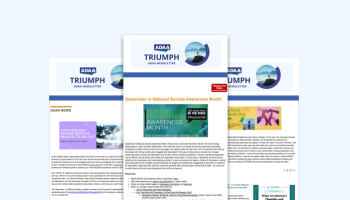
Triumph – Learn, Share Your Story, Access Resources
ADAA’s free monthly newsletter for our public community. Subscribe today!
Subscribe
Free Peer to Peer Support Communities
ADAA’s four free online peer-to-peer communities for people suffering from mental health disorders provides a safe space for support, sharing experiences, and connecting with others.
Learn More

ADAA Self-Help Books – Bookstore/Reading List
Explore self-help and research-focused mental health books focusing on anxiety disorders and depression written by ADAA mental health experts. Purchases through Amazon benefit ADAA.
Learn More
Share:
FacebookXLinkedInEmail
This page was updated 10/29/26

_If you are in crisis, call or text 988 to reach the Suicide & Crisis Lifeline. The information on this website is for educational purposes and is not a substitute for professional medical advice, diagnosis, or treatment. If you or someone you know is struggling, a licensed mental health professional can help. Anxiety, depression, OCD, PTSD, and related disorders are treatable, and effective care is available._
Donate TodayFind Your Therapist
Contact us
8701 Georgia Avenue
Suite #412
Silver Spring, MD 20910
Contact Us Now
Professional SiteConference Site
Find Help
What Are Anxiety and Depression?
Resources & News
About ADAA
Impact Report
Get Involved
Partnerships
Media Kit
Media Inquiries
Triumph Newsletter
FAQs
Do I have an anxiety disorder?
Are there different types of depression?
What causes anxiety disorders?
How do I find the right mental health professional?
Follow Us
Twitter
Facebook
Instagram
Youtube
Linkedin
Founded in 1979, ADAA is an international nonprofit organization dedicated to the prevention, treatment, and cure of anxiety, depression, OCD, PTSD, and co-occurring disorders through aligning research, practice and education.






© 2026 ADAA. All rights reserved.
Privacy Policy
Website Disclaimer
* Webinar Notice
×
#### ADAA Blog Content and Blog Comments Policy
ADAA provides this Website blogs for the benefit of its members and the public. The content, view and opinions published in Blogs written by our personnel or contributors – or from links or posts on the Website from other sources – belong solely to their respective authors and do not necessarily reflect the views of ADAA, its members, management or employees. Any comments or opinions expressed are those of their respective contributors only. Please remember that the open and real-time nature of the comments posted to these venues makes it is impossible for ADAA to confirm the validity of any content posted, and though we reserve the right to review and edit or delete any such comment, we do not guarantee that we will monitor or review it. As such, we are not responsible for any messages posted or the consequences of following any advice offered within such posts. If you find any posts in these posts/comments to be offensive, inaccurate or objectionable, please contact us via email at [email protected] and reference the relevant content. If we determine that removal of a post or posts is necessary, we will make reasonable efforts to do so in a timely manner.
ADAA expressly disclaims responsibility for and liabilities resulting from, any information or communications from and between users of ADAA’s blog post commenting features. Users acknowledge and agree that they may be individually liable for anything they communicate using ADAA’s blogs, including but not limited to defamatory, discriminatory, false or unauthorized information. Users are cautioned that they are responsible for complying with the requirements of applicable copyright and trademark laws and regulations. By submitting a response, comment or content, you agree that such submission is non-confidential for all purposes. Any submission to this Website will be deemed and remain the property of ADAA.
The ADAA blogs are forums for individuals to share their opinions, experiences and thoughts related to mental illness. ADAA wants to ensure the integrity of this service and therefore, use of this service is limited to participants who agree to adhere to the following guidelines:
1. Refrain from transmitting any message, information, data, or text that is unlawful, threatening, abusive, harassing, defamatory, vulgar, obscene, that may be invasive of another ‘s privacy, hateful, or bashing communications – especially those aimed at gender, race, color, sexual orientation, national origin, religious views or disability.
Please note that there is a review process whereby all comments posted to blog posts and webinars are reviewed by ADAA staff to determine appropriateness before comments are posted. ADAA reserves the right to remove or edit a post containing offensive material as defined by ADAA.
ADAA reserves the right to remove or edit posts that contain explicit, obscene, offensive, or vulgar language. Similarly, posts that contain any graphic files will be removed immediately upon notice.
2. Refrain from posting or transmitting any unsolicited, promotional materials, “junk mail,” “spam,” “chain mail,” “pyramid schemes” or any other form of solicitation. ADAA reserves the right to delete these posts immediately upon notice.
3. ADAA invites and encourages a healthy exchange of opinions. If you disagree with a participant ‘s post or opinion and wish to challenge it, do so with respect. The real objective of the ADAA blog post commenting function is to promote discussion and understanding, not to convince others that your opinion is “right.” Name calling, insults, and personal attacks are not appropriate and will not be tolerated. ADAA will remove these posts immediately upon notice.
4. ADAA promotes privacy and encourages participants to keep personal information such as address and telephone number from being posted. Similarly, do not ask for personal information from other participants. Any comments that ask for telephone, address, e-mail, surveys and research studies will not be approved for posting.
5. Participants should be aware that the opinions, beliefs and statements on blog posts do not necessarily represent the opinions and beliefs of ADAA. Participants also agree that ADAA is not to be held liable for any loss or injury caused, in whole or in part, by sponsorship of blog post commenting. Participants also agree that ADAA reserves the right to report any suspicions of harm to self or others as evidenced by participant posts.
✓
Thanks for sharing!
AddToAny
More…
Publisher: Source link