More Than Vanity: What Parents Should Know About Looksmaxxing and Teen Boys
Authored by: Matthew P. Gunn, PhD
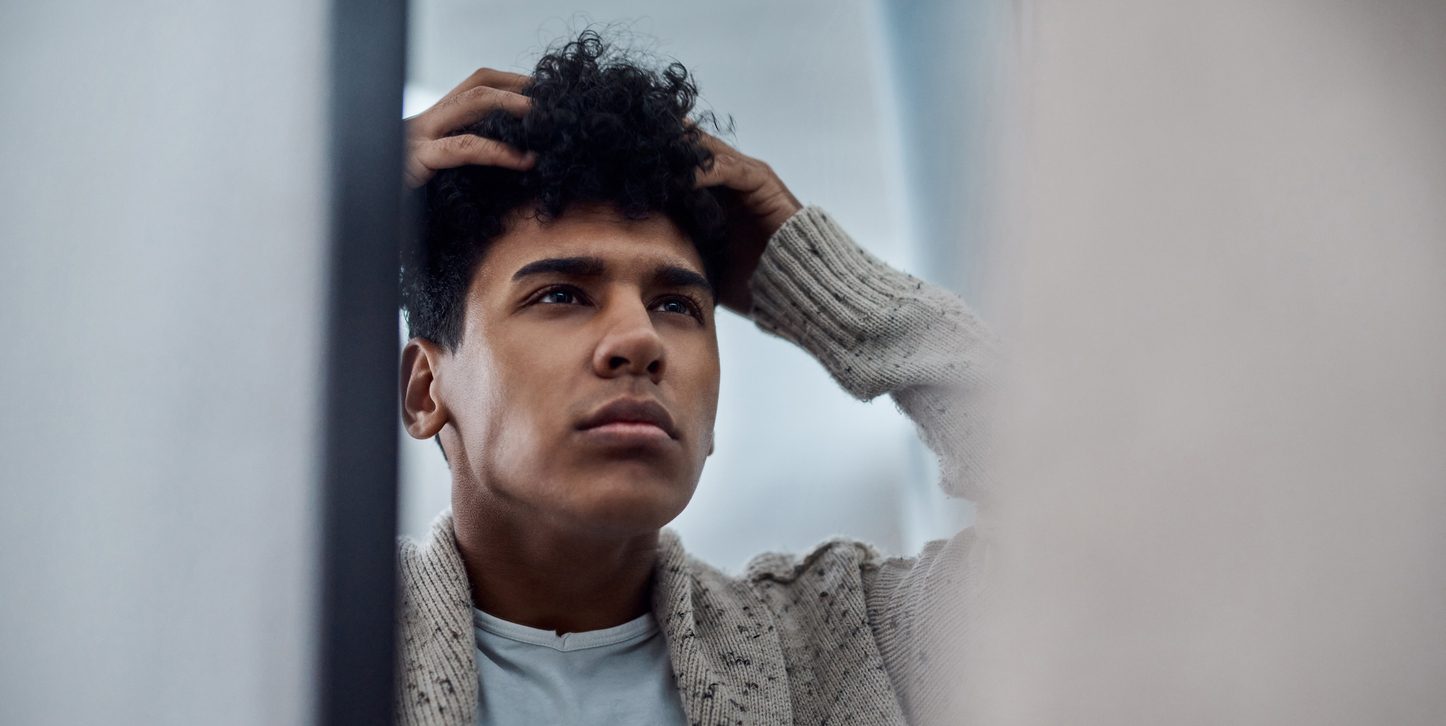
Appearance can shape dating, status, and social treatment. The danger begins when those inequalities become a verdict on a boy’s worth – or a reason to harm his body.
In an April 2026 60 Minutes Australia segment, a looksmaxxing creator described starting testosterone at 14; the segment also examined deliberate facial injury.1 The revealing part was the logic: attractiveness was treated as a key to dating, status, and opportunity.
Parents may first encounter looksmaxxing as grooming, exercise, skincare, clothing, or better photographs. Wanting to look better is not the problem. Concern begins when appearance becomes a verdict on whether a boy deserves love or respect – or when harm seems justified by “moving up.”2
What looksmaxxing means
Looksmaxxing is internet slang for maximizing physical attractiveness. It can include healthy habits such as sleep, exercise, skincare, dental care, and clothing. It can also involve severe dieting, compulsive exercise, unprescribed hormones or stimulants, cosmetic procedures, and deliberate injury. Researchers studying one large looksmaxxing forum found that “self-improvement” could become a hierarchy in which men scrutinized perceived flaws and considered increasingly invasive changes.2
Research on looksmaxxing is still emerging and often examines online forums rather than representative samples of teenagers. The label matters less than the pattern: Is the routine flexible, safe, and part of a full life, or is it secretive, escalating, medically risky, and driven by shame?
Why the message can feel believable
Parents will lose credibility if they simply say looks do not matter. Appearance can influence first contact in online dating.3 Attractiveness can also create a “halo” that colors judgments of intelligence, trustworthiness, and competence.4 It can affect wage offers even when it does not predict actual performance.5
But these findings are averages about first impressions – not a ranking of human worth or a forecast of who will build a mutual, satisfying relationship. Warmth and trustworthiness matter in both early attraction and ongoing relationship satisfaction.6 A more credible message is: “Appearance can affect who receives an initial opportunity. It does not determine your whole future, and no statistic makes harming your body reasonable.”
For boys of color, the pressure can be compounded
Appearance standards and social judgments are not race-neutral. Boys of color should not be treated as one uniform group, but several forms of bias can overlap. Dating research shows same-race preferences and unequal contact patterns.7 Black boys have been judged older and less innocent than White peers, and Black male targets have been perceived as larger and more threatening even when body size did not explain the difference.8,9
Colorism can also shape treatment within and across racial groups.10 Denial is not reassurance. Parents can acknowledge possible bias, help children prepare to cope, strengthen cultural pride, and connect them with supportive relationships.11 A parent might say: “You may be encountering real bias. That is unfair, and it is not proof that your face, skin, hair, or identity is defective.”
Why boys can be drawn in
Looksmaxxing turns uncertainty into a dashboard: body-fat percentages, jaw angles, height, hairlines, and rankings. Numbers can feel more controllable than loneliness, rejection, or vulnerability. Social media makes comparison continuous. In a survey cited by the U.S. Surgeon General, 46% of adolescents ages 13-17 said social media made them feel worse about their body image.12
The risk is not only physical. In some looksmaxxing discussions, rejection becomes a total worldview: women are portrayed as uniformly shallow or malicious, genetics as destiny, and people as fixed hierarchies of worth.2 More broadly, research has documented audience overlap between some manosphere and far-right communities.13 Grooming or fitness content does not inevitably change beliefs. The warning sign is a shift from “I want to improve myself” to “women are the enemy,” “some groups are genetically superior,” “some people are doomed,” or “cruelty is justified.”
Healthy self-care or an unhealthy cycle?
Healthy self-care is flexible, safe, and compatible with school, friendships, eating, sleep, and ordinary life. Concern rises when appearance work becomes consuming, compulsive, medically risky, or disruptive. Warning signs include:
- Compulsive monitoring: hours spent checking, measuring, photographing, rating, or comparing appearance;
- Food and exercise changes: rapid weight loss, severe restriction, compulsive exercise, or panic about missing a workout;
- Risky substances or physical harm: unprescribed hormones, stimulants, injections, do-it-yourself procedures, or deliberate injury;
- Life becoming smaller: avoiding school, friends, photographs, dating, or public places; and
- Hopelessness: statements such as “No one will ever want me” or “Everything depends on how I look.”
Body dysmorphic disorder and related difficulties are not vanity. They can involve consuming preoccupation, checking or concealment rituals, avoidance, and serious impairment. Only a qualified clinician can diagnose BDD.14
How parents can respond without shaming
Start with curiosity, not ridicule. Mocking the vocabulary, influencer, or routine may make a teenager hide what he is doing. A useful response acknowledges unequal treatment without accepting fatalism:
- Lead with credibility. Try: “I believe you that appearance can affect who gets noticed. I am not going to pretend dating and social treatment are perfectly fair.”
- Separate odds from destiny. Add: “A population pattern is not a prediction of your entire future.”
- Examine the evidence together. Ask what a study measured – a rating, swipe, message, second date, or lasting relationship – who was studied, whether the claim is correlational, and what the graph leaves out.
- Support safe changes and set firm limits. Grooming, sensible exercise, sleep, clothing, dental care, and appropriate treatment can be constructive. Unprescribed substances, severe restriction, self-injury, and do-it-yourself procedures are not negotiable experiments.2,14
- Watch the worldview as well as the mirror. Notice whether the content is helping him become healthier and more capable – or more contemptuous, isolated, hopeless, and preoccupied with supposedly superior and inferior groups.
- Build opportunities photographs cannot capture. Help him practice conversation, listening, respectful interest, reading cues, accepting “no,” recovering from rejection, competence, and humor. Warmth and trust are part of attraction and healthy relationships, not consolation prizes.6
When to seek support
Seek medical help promptly for deliberate injury, dangerous substance use, fainting, chest pain, or rapid weight loss. Consider a clinician familiar with adolescent body image, eating disorders, or body dysmorphic disorder when appearance thoughts consume substantial time, drive rituals or avoidance, interfere with daily life, or occur alongside depression, self-harm, suicidal thinking, or intense hopelessness. Effective treatment is available.14
For crisis support in the United States, call or text 988. Call 911 if someone is in immediate danger or needs emergency medical care.15 The goal is not to persuade boys that appearance never matters. It is to help them respond to unfairness without letting insecurity, bias, algorithms, or statistics become self-harm, hatred, a business model, or destiny. His body deserves protection, and his future is larger than a rating.
References
1. 60 Minutes Australia. Looksmaxxer Clavicular walks out of interview after he was asked about Andrew Tate | 60 Minutes . YouTube. Published April 12, 2026. https://www.youtube.com/watch?v=CXKCoFz3WRs
2. Halpin M, Gosse M, Yeo K, Handlovsky I, Maguire F. When help is harm: health, lookism and self-improvement in the manosphere. Sociology of Health & Illness. 2025;47(3):e70015. doi:10.1111/1467-9566.70015
3. Hitsch GJ, Hortaçsu A, Ariely D. What makes you click? Mate preferences in online dating. Quantitative Marketing and Economics. 2010;8(4):393-427. https://doi.org/10.1007/s11129-010-9088-6
4. Eagly AH, Ashmore RD, Makhijani MG, Longo LC. What is beautiful is good, but…: A meta-analytic review of research on the physical attractiveness stereotype. Psychological Bulletin. 1991;110(1):109-128. https://doi.org/10.1037/0033-2909.110.1.109
5. Mobius MM, Rosenblat TS. Why beauty matters. American Economic Review. 2006;96(1):222-235. https://doi.org/10.1257/000282806776157515
6. Valentine KA, Li NP, Meltzer AL, Tsai MH. Mate preferences for warmth-trustworthiness predict romantic attraction in the early stages of mate selection and satisfaction in ongoing relationships. Personality and Social Psychology Bulletin. 2020;46(2):298-311. https://doi.org/10.1177/0146167219855048
7. Fisman R, Iyengar SS, Kamenica E, Simonson I. Racial preferences in dating. Review of Economic Studies. 2008;75(1):117-132. https://doi.org/10.1111/j.1467-937X.2007.00465.x
8. Goff PA, Jackson MC, Di Leone BAL, Culotta CM, DiTomasso NA. The essence of innocence: Consequences of dehumanizing Black children. Journal of Personality and Social Psychology. 2014;106(4):526-545. https://doi.org/10.1037/a0035663
9. Wilson JP, Hugenberg K, Rule NO. Racial bias in judgments of physical size and formidability: From size to threat. Journal of Personality and Social Psychology. 2017;113(1):59-80. https://doi.org/10.1037/pspi0000092
10. Dixon AR, Telles EE. Skin color and colorism: Global research, concepts, and measurement. Annual Review of Sociology. 2017;43:405-424. https://doi.org/10.1146/annurev-soc-060116-053315
11. Anderson RE, Stevenson HC. RECASTing racial stress and trauma: Theorizing the healing potential of racial socialization in families. American Psychologist. 2019;74(1):63-75. https://doi.org/10.1037/amp0000392
12. Office of the Surgeon General. Social media and youth mental health: The U.S. Surgeon General’s advisory. U.S. Department of Health and Human Services; 2023. https://www.hhs.gov/sites/default/files/sg-youth-mental-health-social-media-advisory.pdf
13. Mamié R, Horta Ribeiro M, West R. Are anti-feminist communities gateways to the far right? Evidence from Reddit and YouTube. In: Proceedings of the 13th ACM Web Science Conference 2021. Association for Computing Machinery; 2021:139-147. https://doi.org/10.1145/3447535.3462504
14. Anxiety and Depression Association of America. What is body dysmorphic disorder? Updated June 2, 2026. https://adaa.org/understanding-anxiety/body-dysmorphic-disorder
15. 988 Suicide & Crisis Lifeline. Contact us. https://988lifeline.org/contact-us/
Publisher: Source link