Are you Ready to Start your own Mental Health Therapy Practice?

Skip to main content
ADAA and Lancôme Launch Global “I’m Fine” Initiative to Break the Silence on Women’s Mental Health
# Anxiety & Depression Association of America Triumphing Through Science, Treatment, and Education
About ADAA
About Us
ADAA’s Impact, Strategic Plan, and Finances
ADAA’s Mission/Vision and History
ADAA’s 2025-2028 Strategic Plan
ADAA’s Board of Directors
ADAA’s Team
Join the ADAA Team
ADAA’s Partners
Advertise with ADAA
Donating to ADAA
Contact ADAA
News & Media
Newsroom
Announcements
Members in the News
Members Research News
Newsletter Signups
For Professionals
For the Public
Ways to Give
Ways to Give
Donate Online
Matching Gift Program
Share Your Story
Events
Find Your Therapist
For the public
Donate Today
Conference
Education/CE
Overview
ADAA Webinars & Continuing Education
Live and On-Demand Webinars
Webinar FAQs
CE/CME Information
ADAA Annual Conference
Member Blogs
Member Books & Publications
Resources for Early Career and Student Mental Health Professionals
Resources for Underrepresented Communities
Membership
Become a Member/Rejoin
Institutional/Group Membership
Managing Your Directory Profile
ADAA Professional Committees, Groups and the Scientific Council
Special Interest Groups (SIGs)
ADAA’s Public/Client Resources
ADAA Mental Health Career Center
Awards Programs
Awards Overview
Alies Muskin Career Development Leadership Program
Klein Early Career Investigator Award
Member Recognition Awards
Membership Award for Early Career Professionals
Poster Awards
Become a Mentor
ADAA Member Content
Member Community
Member Blogs
Members in the News
Member Publications
Early Career and Student Mental Health Professionals Resources
Member Research News
Member FAQs
Resources
ADAA Journal of Mood & Anxiety Disorders
ADAA Patient Guide to Mood and Anxiety Disorders
Stay Current with ADAA’s Professional Insights Newsletter
Find Your Therapist
Member Publications
Member Research News
ADAA Annual Conference
Events
ADAA Find Your Therapist Directory
Early Career and Student Mental Health Professionals Resources
ADAA Resources for the Public
Mental Health Resources for Clinicians
Clinical Trials
ADAA Mental Health Career Center
Resources for Underrepresented Communities
ADAA Policy Statements and Coalition Participation
Join/ Renew
Member Community
ADAA Journal
Search


Donate Today
Home
What Are Anxiety and Depression?
Find Help
Learn and Share
Real People. Real Stories
GO BACK
What Are Anxiety and Depression?
What Are Anxiety and Depression?
Depression
Anxiety Disorders
Social Anxiety Disorder
Obsessive-Compulsive & Related Disorders
Related Disorders
Stress
Post-Traumatic Stress Disorder (PTSD)
Postpartum Disorders
Trauma
Bipolar Disorder
Suicide and Prevention
Other Conditions
Stories of Triumph
Clinical Trials
Facts & Statistics
GO BACK
Find Help
How Can I Find Help?
Find Your ADAA Therapist
ADAA Online Peer to Peer Communities
Free Webinars
“What is…?” ADAA Mental Health Animated Videos
Blogs
Treatment Help
Support
By Community
By Disorder
Self-Help Books
Recursos en Espanol
GO BACK
Learn and Share
Overview
Webinars, Podcasts, and Videos
Blogs, Self-Help Books, Infographics, Newsletters and more
Read and Share Your Story
GO BACK
Depression
What is Depression?
Symptoms
Treatment & Management
Tips to Manage Depression
Postpartum Disorders
What is Seasonal Affective Disorder (SAD)
Major Depressive Disorder (MDD) Peer to Peer Community
Facts & Statistics
GO BACK
Anxiety Disorders
Anxiety: Symptoms, Types, Causes & Treatment
What is Generalized Anxiety Disorder (GAD)?
Tips to Manage Anxiety and Stress
GAD Myths & Realities
Health Anxiety
Facts & Statistics
Panic Disorder
What are Phobias?
What is Selective Mutism?
GO BACK
Obsessive-Compulsive & Related Disorders
What is OCD?
Body Dysmorphic Disorder
Body-Focused Repetitive Behaviors (BFRBs)
GO BACK
Related Disorders
What are Related Disorders?
Adult ADHD (Attention Deficit Hyperactive Disorder)
What is Autism Spectrum Disorder (ASD)?
BDD (Body Dysmorphic Disorder)
Chronic Pain
Chronic Illness/Disease
Eating Disorders
Fibromyalgia
What is Grief Disorder and Grief?
Headaches
Illness Anxiety Disorder (Health Anxiety)
What is Hoarding Disorder?
Irritable Bowel Syndrome (IBS)
Sleep Disorders
Substance Abuse
GO BACK
Treatment Help
Overview
Find Your ADAA Therapist
Mental Health Therapy Types
Types of Mental Health Care Professionals
Choosing a Mental Health Therapist
Medication and Other Treatment Options for Anxiety Disorders and Depression
Residential Treatment Centers
Prescription Digital Therapeutics (PDT)
Self-Help Books
Recursos En Español
Integrative Behavioral Health
Pediatric Brochure for Pediatric Primary Care Providers and Parents
GO BACK
Support
ADAA’s Online Peer-to-Peer Communities
Find Your ADAA Therapist
Self-help Books by ADAA Members
Recursos en Espanol
Community Resources
GO BACK
By Community
Overview
Life Stage
Teens & College Students
Older Adults
Family, Friends & Caregivers
Child/Teen Mental Health: A Parent Guide
Spouses/Partners
Caregivers
Veterans & Military Families
Friends & Relatives
Identity & Community
Asian Americans & Pacific Islanders
AMEMSA Communities
Black & African American Communities
BIPOC Communities
Latiné/Hispanic Communities
LGBTQ+ Community
Men’s Mental Health
Multiracial Communities
Native & Indigenous Communities
Women’s Mental Health
Accessibility & Equity
Low-Income Households
Diversity, Equity & Inclusion Resources
GO BACK
By Disorder
Overview
General Anxiety
Co-Ocurring Disorders
Depression
Obsessive-Compulsive Disorder (OCD)
Post-Traumatic Stress Disorder (PTSD)
GO BACK
Webinars, Podcasts, and Videos
Overview
Webinars
Videos and Podcasts
“What is…?” ADAA Mental Health Animated Videos
ADAA Inside Mental Health Podcast Series
GO BACK
Blogs, Self-Help Books, Infographics, Newsletters and more
Overview
Blogs
Self-Help Books and Reading List
Triumph E-Newsletter
Infographics
Brochures
GO BACK
Read and Share Your Story
Read Real Stories by Real People
Share Your Mental Health Story
About ADAA
About Us
ADAA’s Impact, Strategic Plan, and Finances
ADAA’s Mission/Vision and History
ADAA’s 2025-2028 Strategic Plan
ADAA’s Board of Directors
ADAA’s Team
Join the ADAA Team
ADAA’s Partners
Advertise with ADAA
Donating to ADAA
Contact ADAA
News & Media
Newsroom
Announcements
Members in the News
Members Research News
Newsletter Signups
For Professionals
For the Public
Ways to Give
Ways to Give
Donate Online
Matching Gift Program
Share Your Story
Events
Find Your Therapist
For Professionals
Home
About ADAA
About Us
ADAA’s Impact, Strategic Plan, and Finances
ADAA’s Mission/Vision and History
ADAA’s 2025-2028 Strategic Plan
ADAA’s Board of Directors
ADAA’s Team
Join the ADAA Team
ADAA’s Partners
Advertise with ADAA
Donating to ADAA
Contact ADAA
News & Media
Newsroom
Announcements
Members in the News
Members Research News
Newsletter Signups
For Professionals
For the Public
Ways to Give
Ways to Give
Donate Online
Matching Gift Program
Share Your Story
Events
Find Your Therapist
For the public
Conference
Education/CE
Membership
Resources
GO BACK
Education/CE
Overview
ADAA Webinars & Continuing Education
ADAA Annual Conference
Member Blogs
Member Books & Publications
Resources for Early Career and Student Mental Health Professionals
Resources for Underrepresented Communities
GO BACK
Membership
Become a Member/Rejoin
Institutional/Group Membership
Managing Your Directory Profile
ADAA Professional Committees, Groups and the Scientific Council
Special Interest Groups (SIGs)
ADAA’s Public/Client Resources
ADAA Mental Health Career Center
Awards Programs
ADAA Member Content
Member FAQs
GO BACK
Resources
ADAA Journal of Mood & Anxiety Disorders
ADAA Patient Guide to Mood and Anxiety Disorders
Stay Current with ADAA’s Professional Insights Newsletter
Find Your Therapist
Member Publications
Member Research News
ADAA Annual Conference
Events
ADAA Find Your Therapist Directory
Early Career and Student Mental Health Professionals Resources
ADAA Resources for the Public
Mental Health Resources for Clinicians
Clinical Trials
ADAA Mental Health Career Center
Resources for Underrepresented Communities
ADAA Policy Statements and Coalition Participation
GO BACK
ADAA Webinars & Continuing Education
Live and On-Demand Webinars
Webinar FAQs
CE/CME Information
GO BACK
Awards Programs
Awards Overview
Alies Muskin Career Development Leadership Program
Klein Early Career Investigator Award
Member Recognition Awards
Membership Award for Early Career Professionals
Poster Awards
Become a Mentor
GO BACK
ADAA Member Content
Member Community
Member Blogs
Members in the News
Member Publications
Early Career and Student Mental Health Professionals Resources
Member Research News
Join/ Renew
Member Community
ADAA Journal
Search
Blog
# Are you Ready to Start your own Mental Health Therapy Practice?
 MS Broudy, PhD

10.29.2026
Share
##### Share
×
Share
FacebookXLinkedInEmail
_Authored by MS Broudy, PhD, in collaboration with__TheraPlatform__._
### The lure of owning a private therapy practice is undeniable: You control the clientele. You make the final decisions. You work when you want.
While your entrepreneurial drive and clinical expertise may be strong, running a business means taking on a new set of responsibilities and developing news skills. Knowing where to start can be difficult. We’ll explore the essentials of starting a private mental health practice: goals, finances, legal and business considerations, and the client experience.
#### What is your vision for your practice?
Before acting, consider developing a framework for what you want to accomplish. Essentially, what do you want your private practice to look like?Ask yourself the following questions as you think about your practice:
#### Who do you want to serve?
Do you want to provide therapy for anyone who steps in the door, or will you specialize in certain mental health conditions or populations?
For example, clinicians may want to focus on conditions or populations aligned with their training like depression, anxiety, obsessive-compulsive disorder or trauma-related concerns.
Specialization influences referrals, clinical training needs, and how a practice markets its services. Having a niche may also help a therapist stand out if they want to get credentialed with insurance companies.
Another consideration is that therapists have an ethical obligation to see people within your scope of practice.
#### How will you get paid?
When it comes to generating revenue for your mental health therapy practice, clinicians have a few options.
With private-pay clients, you can set the fee, and you will likely make more money per session.
However, you are limiting the socioeconomic status of your clientele.
If you want to serve middle-class and underprivileged clients, you will likely need to accept insurance, and the administrative overhead that comes with it.
#### What services will you offer?
Do you want to provide individual, group, couples, or family therapy? What about psychological testing? Will someone in your practice prescribe medication?
Adding a prescribing professional, or providing psychological evaluations, will add costs and complications. Understanding the services you offer will help determine your revenue.
#### Where will you provide care?
Do you want to perform telehealth, in-person therapy, or both? In-person practices require office space and have overhead costs. Telehealth demands technological knowledge, as well as a private, professional-looking area free of distraction.
#### How many clients does your mental health therapy practice need to be profitable?
An important aspect of costs includes calculating how many clients you need to see to support your financial needs.
One accurate way to estimate the number of clients you need to see each week is to work backward from your income goals (minus expenses) while accounting for cancellations, time off, and non-billable work.
For example, a therapist who needs $8,000 per month to cover business expenses and desired compensation, and collects an average of $125 per completed session, would need approximately 64 completed sessions per month. This calculation should also account for cancellations, unpaid time, taxes, and other financial obligations.
#### How much will you work?
When calculating time spent at work, practitioners may consider the number of clients scheduled each week for clinical care, as well as the time needed for documentation and administrative duties.
A 2025 Psychotherapy Action Network survey of 667 mental health professionals found that 49% identified working with insurance companies as a major challenge, while 45% cited the time required for notes and documentation.
These findings highlight the importance of accounting for administrative work when planning your schedule and maintaining a healthy work-life balance.
Clinicians need to find a balance between work responsibilities and personal happiness. A burnt-out therapist is no help to anyone.
#### What are the costs associated with launching a private mental health therapy practice?
Once you’ve settled on your vision and the type of clientele you want to serve, it’s time to understand the costs of launching a mental health therapy practice. Most therapists don’t want to think about this part of the equation, but it is a critical part of starting a private practice. Taking into account the following factors, will you make enough money to support your income goals?
#### What are the Startup costs and ongoing expenses?
Some costs will be the same whether you practice in-person or virtually. These include staff salaries, technology costs (e.g., EHRs, payment processing), business licenses, and other materials.
Some expenses will be determined by whether you have an in-person vs. teletherapy practice. Paying for office space, furniture, and monthly utilities can add up quickly. Starting an entirely virtual practice comes with its own set of considerations.
#### What are your Staffing costs?
Are you opening a solo practice or do you have other therapists working for you? The more clinicians in the practice, the higher the costs. However, also to note that those therapists will owe you a percentage of their income.
Other considerations for hiring therapists include how those practitioners will be classified. Many private practices treat practitioners as individual contractors rather than employees.
While hiring independent contractors relieves owners of employee-related benefits, such as vacation time and health plans, contractors legally have greater independence in how they perform their work, and exercising too much control over execution can open owners up to a misclassification risk.
Retention is also less predictable with contractors as they tend to work for multiple practices or maintain their own businesses.
#### What are the legal and compliance aspects of starting a private practice?
Several professional and business operations need to be enacted before you can start seeing clients.
Establishing a National Provide Identifier
First, you need your state professional license to practice. Once you have that, you can apply for a National Provider Identifier (NPI) and buy malpractice insurance.
Business Setup
Starting a private practice requires several steps. The table below outlines what’s required to get started from a legal stand point.
#### Business setup checklist for starting a private practice
#### Business setup step#### What therapists need to consider
##### Choose a business structure##### Decide whether to operate as a sole proprietorship or establish a limited liability company (LLC). Depending on state requirements, other professional business structures may apply.
##### Obtain an Employer Identification Number (EIN)##### Apply for an EIN through the IRS if required for your business structure, employees, or tax obligations. Some sole proprietors without employees may not need one.
##### Obtain business licenses and registrations##### Check state and local requirements for business registration, licenses, and permits. Requirements vary by location and business structure.
##### Open a business bank account##### Establish a dedicated account to separate business and personal finances and simplify bookkeeping.
##### Select accounting and payment tools##### Choose software to track income, manage expenses, process client payments, and support financial reporting.
##### Create a practice website##### Develop a website that explains your services, specialties, fees or insurance participation, contact information, and appointment scheduling options.
Note: Business formation, licensing, and tax requirements vary by state. Mental health professionals should consult qualified legal or accounting professionals when establishing their practice.
#### Clinical and administrative processes
Before you see your first client, it is a good idea to establish the framework for their care.
Create security and privacy procedures. For example, if you still have paper records, how will you store them to meet HIPAA compliance?
Create forms and templates for intake, treatment plans, release of information, and progress notes. You’ll be using these daily as part of your practice. Make sure you have a streamlined process in place that is easy for you and the client. Additionally, you will need to provide clients with the policies of the practice, including fee agreements and how you handle personal health information.
Establish emergency protocols. How will you and your staff handle emergencies? What will you do, for instance, if a client has a mental health crisis in-person? Therapists must also develop an emergency protocol tailored to telehealth. This plan should specify how to locate clients in crisis, identify local emergency contacts, and outline steps to follow if immediate intervention is needed.
#### The client experience
Good client outcomes are the foundation of a successful practice. Private practice owners need to consider the client experience from intake through discharge.
Some questions to consider:
How will someone find you? Are you listed on popular directories such as Psychology Today and GoodTherapy?
Do you have a phone number to call for appointments, or do you want scheduling to be done online?
Can initial paperwork be completed before the intake session?
If using telehealth, do clients videoconference through a patient portal or a secure link?
How does a client communicate with the therapist? Phone, client portal, email, or text?
How are clients presented with bills? Is it through a client portal via an EHR, email, or snail mail?
Do clients pay online or in person? Do you ask them to give a credit card for ongoing fees?
Will you follow up with clients after discharge?
Launching your own mental health therapy practice can be exciting. Developing goals and plans ahead of opening your business is a great way to set yourself up for success while ensuring your clinical skills will help your clients achieve great outcomes.
Interested in learning more about how to launch your own private practice? TheraPlatform offers a free guide to launching a private practice written by a mental health therapist in private practice.
References
Centers for Medicare & Medicaid Services. _National provider identifier standard_. https://www.cms.gov/regulations-and-guidance/administrative-simplification/nationalprovidentstand
Entrepreneurial Therapist. Should you form an LLC for your therapy practice? A complete guide. https://www.theentrepreneurialtherapist.com/blog/k9khupudjydz4dqnze44aj7xs8ufye
Marschal, A. (2024, December 5). VeryWell Mind. What your therapist’s scope of practice means for you. https://www.verywellmind.com/what-is-scope-of-practice-for-therapists-5323826
Psychotherapy Action Network. (2025). Study: Practice management companies. https://www.psian.org/practice-management-companies
_This blog is presented in collaboration with__TheraPlatform,__an EHR and practice management software platform for mental health professionals and private practices._
## Search Blogs
Search
.
Filter by: Category Demographic
Search

Advertisement


MS Broudy, PhD
MS Broudy, PhD
MS Broudy, PhD, is a psychologist, and mental health writer with over 20 years of clinical experience. He contributes educational content to TheraPlatform, a mental health EHR and practice management software provider. He holds a PhD. in clinical psychology and …
Read more
You Might Be Interested In
Webinar Ethics and Self-Care for Mental Health Professionals Learn moreWebinar Six Strategies for Establishing a Successful Practice Learn moreWebinar Integrating Technology Tools into Your Practice Learn more
Webinar Ethics and Self-Care for Mental Health Professionals Learn more
Webinar Six Strategies for Establishing a Successful Practice Learn more
Webinar Integrating Technology Tools into Your Practice Learn more
#### ADAA Blog Content and Blog Comments Policy
ADAA provides this Website blogs for the benefit of its members and the public. The content, view and opinions published in Blogs written by our personnel or contributors – or from links or posts on the Website from other sources – belong solely to their respective authors and do not necessarily reflect the views of ADAA, its members, management or employees. Any comments or opinions expressed are those of their respective contributors only. Please remember that the open and real-time nature of the comments posted to these venues makes it is impossible for ADAA to confirm the validity of any content posted, and though we reserve the right to review and edit or delete any such comment, we do not guarantee that we will monitor or review it. As such, we are not responsible for any messages posted or the consequences of following any advice offered within such posts. If you find any posts in these posts/comments to be offensive, inaccurate or objectionable, please contact us via email at [email protected] and reference the relevant content. If we determine that removal of a post or posts is necessary, we will make reasonable efforts to do so in a timely manner.
ADAA expressly disclaims responsibility for and liabilities resulting from, any information or communications from and between users of ADAA’s blog post commenting features. Users acknowledge and agree that they may be individually liable for anything they communicate using ADAA’s blogs, including but not limited to defamatory, discriminatory, false or unauthorized information. Users are cautioned that they are responsible for complying with the requirements of applicable copyright and trademark laws and regulations. By submitting a response, comment or content, you agree that such submission is non-confidential for all purposes. Any submission to this Website will be deemed and remain the property of ADAA.
The ADAA blogs are forums for individuals to share their opinions, experiences and thoughts related to mental illness. ADAA wants to ensure the integrity of this service and therefore, use of this service is limited to participants who agree to adhere to the following guidelines:
1. Refrain from transmitting any message, information, data, or text that is unlawful, threatening, abusive, harassing, defamatory, vulgar, obscene, that may be invasive of another ‘s privacy, hateful, or bashing communications – especially those aimed at gender, race, color, sexual orientation, national origin, religious views or disability.
Please note that there is a review process whereby all comments posted to blog posts and webinars are reviewed by ADAA staff to determine appropriateness before comments are posted. ADAA reserves the right to remove or edit a post containing offensive material as defined by ADAA.
ADAA reserves the right to remove or edit posts that contain explicit, obscene, offensive, or vulgar language. Similarly, posts that contain any graphic files will be removed immediately upon notice.
2. Refrain from posting or transmitting any unsolicited, promotional materials, “junk mail,” “spam,” “chain mail,” “pyramid schemes” or any other form of solicitation. ADAA reserves the right to delete these posts immediately upon notice.
3. ADAA invites and encourages a healthy exchange of opinions. If you disagree with a participant ‘s post or opinion and wish to challenge it, do so with respect. The real objective of the ADAA blog post commenting function is to promote discussion and understanding, not to convince others that your opinion is “right.” Name calling, insults, and personal attacks are not appropriate and will not be tolerated. ADAA will remove these posts immediately upon notice.
4. ADAA promotes privacy and encourages participants to keep personal information such as address and telephone number from being posted. Similarly, do not ask for personal information from other participants. Any comments that ask for telephone, address, e-mail, surveys and research studies will not be approved for posting.
5. Participants should be aware that the opinions, beliefs and statements on blog posts do not necessarily represent the opinions and beliefs of ADAA. Participants also agree that ADAA is not to be held liable for any loss or injury caused, in whole or in part, by sponsorship of blog post commenting. Participants also agree that ADAA reserves the right to report any suspicions of harm to self or others as evidenced by participant posts.
Take Action
Find Help. Learn More. Support ADAA.

Donate Today
Your support changes lives. Thank you!
Learn More
Get Involved Today
Share your personal story.
Start a fundraiser.
Shop to support our mission and more.
Learn More
ADAA’s Find Your Therapist
ADAA’s Find Your Therapist Directory connects YOU with licensed mental health professionals who are experts in anxiety, depression, OCD, PTSD and co-occurring disorders.
Learn More
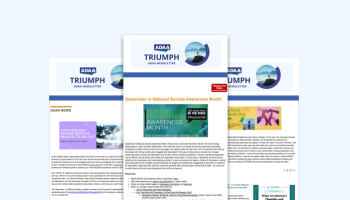
Triumph – Learn, Share Your Story, Access Resources
ADAA’s free monthly newsletter for our public community. Subscribe today!
Subscribe
Free Peer to Peer Support Communities
ADAA’s four free online peer-to-peer communities for people suffering from mental health disorders provides a safe space for support, sharing experiences, and connecting with others.
Learn More

ADAA Self-Help Books – Bookstore/Reading List
Explore self-help and research-focused mental health books focusing on anxiety disorders and depression written by ADAA mental health experts. Purchases through Amazon benefit ADAA.
Learn More
Share:
FacebookXLinkedInEmail
This page was updated 10/29/26

_If you are in crisis, call or text 988 to reach the Suicide & Crisis Lifeline. The information on this website is for educational purposes and is not a substitute for professional medical advice, diagnosis, or treatment. If you or someone you know is struggling, a licensed mental health professional can help. Anxiety, depression, OCD, PTSD, and related disorders are treatable, and effective care is available._
Join TodayMember Access
Contact us
8701 Georgia Avenue
Suite #412
Silver Spring, MD 20910
Contact Us Now
Public SiteConference Site
Conference
Education
Membership
Committees & SIGs
Partnerships
About ADAA
Impact Report
Member Login
Join Today
Find Your Therapist
Donate
Media Kit
Media Inquiries
Insights Newsletter
FAQs
How do I access my member benefits?
How do I renew my ADAA membership?
Can I publicize my book on the ADAA website?
Follow Us
Twitter
Facebook
Instagram
Youtube
Linkedin
Founded in 1979, ADAA is an international nonprofit organization dedicated to the prevention, treatment, and cure of anxiety, depression, OCD, PTSD, and co-occurring disorders through aligning research, practice and education.






© 2026 ADAA. All rights reserved.
Privacy Policy
Website Disclaimer
Webinar Notice
×
#### ADAA Blog Content and Blog Comments Policy
ADAA provides this Website blogs for the benefit of its members and the public. The content, view and opinions published in Blogs written by our personnel or contributors – or from links or posts on the Website from other sources – belong solely to their respective authors and do not necessarily reflect the views of ADAA, its members, management or employees. Any comments or opinions expressed are those of their respective contributors only. Please remember that the open and real-time nature of the comments posted to these venues makes it is impossible for ADAA to confirm the validity of any content posted, and though we reserve the right to review and edit or delete any such comment, we do not guarantee that we will monitor or review it. As such, we are not responsible for any messages posted or the consequences of following any advice offered within such posts. If you find any posts in these posts/comments to be offensive, inaccurate or objectionable, please contact us via email at [email protected] and reference the relevant content. If we determine that removal of a post or posts is necessary, we will make reasonable efforts to do so in a timely manner.
ADAA expressly disclaims responsibility for and liabilities resulting from, any information or communications from and between users of ADAA’s blog post commenting features. Users acknowledge and agree that they may be individually liable for anything they communicate using ADAA’s blogs, including but not limited to defamatory, discriminatory, false or unauthorized information. Users are cautioned that they are responsible for complying with the requirements of applicable copyright and trademark laws and regulations. By submitting a response, comment or content, you agree that such submission is non-confidential for all purposes. Any submission to this Website will be deemed and remain the property of ADAA.
The ADAA blogs are forums for individuals to share their opinions, experiences and thoughts related to mental illness. ADAA wants to ensure the integrity of this service and therefore, use of this service is limited to participants who agree to adhere to the following guidelines:
1. Refrain from transmitting any message, information, data, or text that is unlawful, threatening, abusive, harassing, defamatory, vulgar, obscene, that may be invasive of another ‘s privacy, hateful, or bashing communications – especially those aimed at gender, race, color, sexual orientation, national origin, religious views or disability.
Please note that there is a review process whereby all comments posted to blog posts and webinars are reviewed by ADAA staff to determine appropriateness before comments are posted. ADAA reserves the right to remove or edit a post containing offensive material as defined by ADAA.
ADAA reserves the right to remove or edit posts that contain explicit, obscene, offensive, or vulgar language. Similarly, posts that contain any graphic files will be removed immediately upon notice.
2. Refrain from posting or transmitting any unsolicited, promotional materials, “junk mail,” “spam,” “chain mail,” “pyramid schemes” or any other form of solicitation. ADAA reserves the right to delete these posts immediately upon notice.
3. ADAA invites and encourages a healthy exchange of opinions. If you disagree with a participant ‘s post or opinion and wish to challenge it, do so with respect. The real objective of the ADAA blog post commenting function is to promote discussion and understanding, not to convince others that your opinion is “right.” Name calling, insults, and personal attacks are not appropriate and will not be tolerated. ADAA will remove these posts immediately upon notice.
4. ADAA promotes privacy and encourages participants to keep personal information such as address and telephone number from being posted. Similarly, do not ask for personal information from other participants. Any comments that ask for telephone, address, e-mail, surveys and research studies will not be approved for posting.
5. Participants should be aware that the opinions, beliefs and statements on blog posts do not necessarily represent the opinions and beliefs of ADAA. Participants also agree that ADAA is not to be held liable for any loss or injury caused, in whole or in part, by sponsorship of blog post commenting. Participants also agree that ADAA reserves the right to report any suspicions of harm to self or others as evidenced by participant posts.
✓
Thanks for sharing!
AddToAny
More…
Publisher: Source link