Why Biohack? Accepting Our Mortality
Last week, I told you I would give you my perspective on striking a balance between the pursuit of health as reasonable self-care versus an unhealthy obsession.
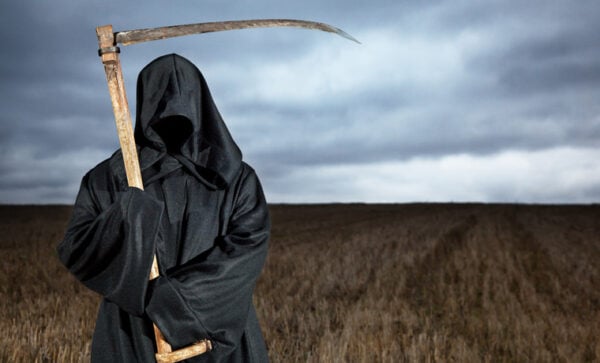
Here’s the most important thing to know: if becoming healthy or living a long life is not to turn into a vain, selfish, time-consuming infatuation, you must understand and accept that you will eventually break.
No matter how strict you and I are and how fit you and I get, at the end of the day, we’ll be lying on our deathbed with stringy beef jerky for muscles, porous bones, clogged arteries, and plaqued brains.
I read the Bible every day, and it’s chock-full of these types of reminders. Outwardly, we are wasting away (2 Corinthians 4:16), the earthly tent we live in is eventually destroyed (2 Corinthians 5:1), our lives are like grass, we flourish like the flower of the field, then the wind blows us over, and we are gone (Psalm 103:15-16). We are fleeting shadows, and we do not endure (Job 14:1-2).
So I’m not interested in biohacking, supplements, diet, workouts, and investigating the fringes of the health, fitness and longevity universe because I think six-pack abs are to be worshiped as the pinnacle of the human experience, because I think that when I take my last breath the “game is over,” or because my philosophy is to be some kind of a modern-day Gollum.
Instead, my goal is to live as healthily as reasonably possible, as close as possible to the day of my death, and to eventually die after a day of something like heliskiing in the Alps at 90-some years old, preferably while making love to my wife—a scenario she thinks would be a little awkward and logistically challenging.
See, no matter whether you’re doing the basic or the advanced stuff, there is value to caring for your body and brain, because these are the vessels God has given us to carry out His purpose for our lives.
It’s simply harder to be as impactful and purposeful as you can be—much less wrestle, hike, or throw a football with your grandkids, or be any other kind of valuable asset to your family—if your brain is foggy, your joints hurt, you’ve got nerve irritation from type II diabetes, and you’re morbidly obese.
So you should think about treating your body like a house you get to live in for another maybe fifty, sixty, or seventy years. Ideally (and you can go wherever you want with these metaphors), the sink doesn’t leak all night, the toilet mostly flushes, and there are at least a few shingles still left on the roof.
And you should do this while balancing a stoic life of occasional cold plunging and kettlebell swinging, an ascetic life that weaves in fasting and self-denial, and an Epicurean life that enjoys all of God’s great creation, without hedonism, gluttony, laziness, and intemperance.
What that looks like is going to be different for each of us.
For example, I’m in the fitness industry. It’s my job to tinker with biohacks, experiment with new protocols, and, frankly, to show proof of concept by looking halfway decent with my shirt off on Instagram. Since this world is my job and I get paid to immerse myself in it, I probably average a couple of hours a day in some form of “self-care.”
Assuming you’re weaving low levels of physical activity, “exercise snack” breaks, and some amount of dietary temperance into your average day, you can easily get away with about 45 to 60 minutes of self-care. In the coming weeks, I’ll tell you how to easily do that.
But first, there’s a very important concept that you must understand. It’s a concept that’s often ignored in the health and fitness industry, but it should form the baseline of the way that you think about maintaining your own healthspan and lifespan in a reasonable and balanced way.
I’ll share that concept with you in next week’s newsletter.
In the meantime, leave your questions, comments, and feedback below. I read them all. I’m especially interested in hearing what your own why is for your fitness, health, or longevity practice.
—
This website does not provide medical advice.
The content of this website, such as graphics, images, text and all other materials, is provided for reference and educational purposes only. The content is not meant to be complete or exhaustive or to be applicable to any specific individual’s medical condition.
This website is not an attempt to practice medicine or provide specific medical advice, and it should not be used to make a diagnosis or to replace or overrule a qualified health care provider’s judgment. Users should not rely up this website for emergency medical treatment. The content on this website is not intended to be a substitute for professional medical advice, diagnosis or treatment.
Always consult with a qualified and licensed physician or other medical care provider, and follow their advice without delay regardless of anything read on this website.
Previously Published on Ben Greenfield’s blog
iStock image
The post Why Biohack? Accepting Our Mortality appeared first on The Good Men Project.
Publisher: Source link