
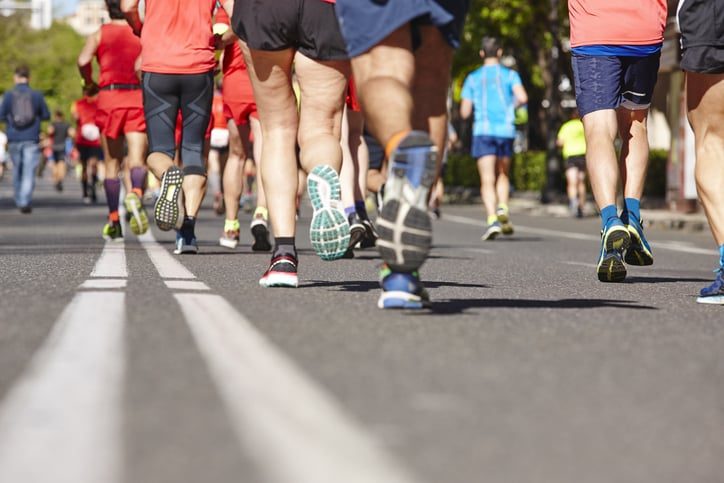
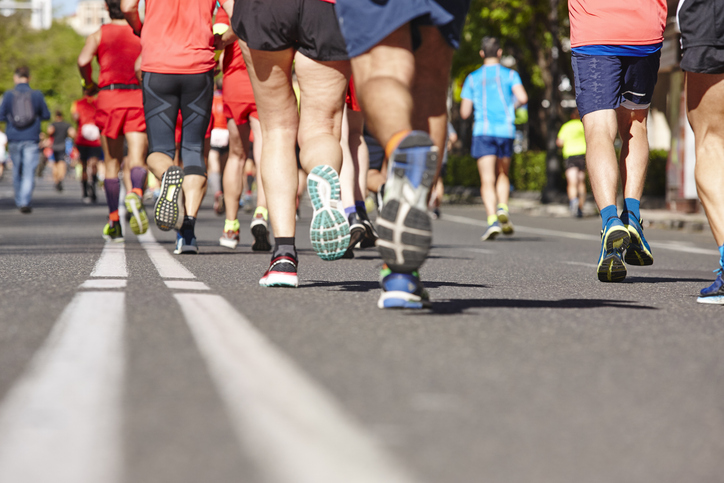
For people who walk or run, lane 1 of the track is the holy grail when working out. It is the least distance per lap. They say a track is 400 meters, but it is only 400 meters if you run in lane 1. Runners in lanes 2, 3, or 4 run a longer distance, and each lane is 7.67 meters longer than the one before.
I mention this as running and walking are becoming more common, and more people are flocking to the track. When you watch professional races, especially when runners are going for world record attempts, you will often see lapped runners move out to lane 2 in races like the 5,000 or 10,000 meters. This is common courtesy because the runner is going for a record, and you don’t want to impede them. It is also a show of respect and deference to a faster runner.
However, for regular people, runners are divided in their discussions about people being in lane 1. I try never to pressure someone walking to get out of lane 1 when I am running or doing a faster workout. I might be guilty of making a pass in lane 2 instead of lane 3, or on the outside of lane 1, where I might spook that walker if they have their headphones in.
Outside the track, I give another runner or walker a ton of space by going out to the road or crossing the street, especially if it’s a family or someone walking their dog, but on the track, it’s different because of how much impact that has on the workouts. When I am on the track and hear a faster runner coming behind me, I usually move out to lane 2.
But I have had runner friends get upset that walkers take up lanes 1, and don’t get the hint that it’s impeding the runner’s workout. I have one friend who got into an argument with a few walkers about this exact issue. The walkers did not budge and told him no one owns the track (fair point). I rarely say anything, but I occasionally get annoyed if it’s a line of three or four walkers taking up the track from lanes 1 to 3, or at people who park their bikes on the track and force everyone to go around.
If I am on the track during an easy run, I care significantly less or not at all, but I think when we runners are doing workouts, such as 6 mile repeats at a 7-minute mile pace, the detail-oriented runners can get pretty upset about the perceived lack of control over the workout.
. . .
It sounds like such a small issue to people who don’t run on tracks or those who aren’t runners or walkers. But it’s one of many examples of the difficulty of sharing public spaces in society.
For newer runners who share this frustration with me, I tell them it’s an occupational hazard of running, something to unfortunately get used to. Yes, no one owns the track, and some people will get the hint, some won’t. Others don’t generally know how we runners think of track etiquette. But ultimately, we can control our own actions, not the actions of others, and it’s easier to go into these situations with lower rather than higher expectations (at least to me).
There are also tracks where this is inevitable for runners. I am thinking of my experience running on the track in McCarren Park in Brooklyn, New York. The weather was terrible that day (it was snowing), so it was less crowded than usual, but it is known as one of the few publicly accessible tracks in New York City, so there were still about 20 people on the track. Sometimes we had to move out to lanes 3 or 4 when passing people. But there were also other runners passing us as I paced one of my friends to a 5k PR attempt.
Overall, I’m someone for whom the pros of running on a crowded track outweigh the cons. No one is out there trying to get into a collision, but I get some social motivation and energy from there being other people grinding, and other people to watch the workout. I get energy from passing the same group of people 10 or more times on a single run.
It’s also good practice for a lot of races where runners have to pass many people — in a lot of lower production races that aren’t the Boston or New York City Marathon, there’s a good chance the route is not completely blocked off, or that the 5k will merge with the 10k, or the marathon will merge with the half-marathon. It takes a ton of weaving and yelling “on your left!” to get through these crowds, which is not ideal, but is part of different runners sharing the same space.
. . .
There is a lot of etiquette that goes with sharing a track, but also a sidewalk or trail. As a group, taking up the whole trail or sidewalk is seen as rude, so the groups I run with try not to do it so that bikers, runners, and walkers can all pass. We haven’t been perfect every time, but we try to be good about sharing. It’s tougher when there is no sidewalk and a group of us runners needs to share the road with cars — the only thing to do is try to run single file and on the opposite side of the road from traffic.
A lot of the time, it is an infrastructural design problem — the sidewalk isn’t very wide, or there’s no sidewalk, and we have to share a limited space. The track also has limited space, and walking and running are getting more popular.
It’s not the same, but recently, my social algorithm has been showing me a bunch of videos of drivers hitting bikers on the road. I saw a video on Instagram of a pretty narrow road with no bike lane and barely any shoulder. It was a group of six to eight bikers, and they were taking up 2/3 of the right lane. The car would have had to go past the double yellow lines to pass the bikers, and if there was any oncoming traffic, they would just have to share the road.
The car gave little room and ended up hitting two of the bikers. He was later charged, and the news outlet said he thought the bikers were in the wrong for taking up so much of the road.
I wasn’t surprised that a driver would think like that, but I was surprised when I saw the comments on the post. Over 10,000 people liked a comment that said “I stand with the driver,” while around a third said “I stand with the biker.” There was a ton of victim-blaming of the bikers taking up so much of the road and riding two bikes across.
Again, this is more of an infrastructure issue of a narrow road, likely built for cars rather than road bikes. Although I run on these roads and used to ride a bike to commute in college, I still get nervous around bikers when I drive. I don’t get mad, but I just get worried about whether the amount of space I give is enough, and whether I checked thoroughly enough for oncoming traffic.
Anyway, thinking about lane 1 of the track and these videos of bikers and drivers debating who’s in the right when a car hits a bike has me thinking about how we share our public spaces. We can only control our behavior and not the behavior of others.
But it helps to be aware that (most) people have no intention to impede or harm the people around us. For fellow runners who are trying to do intervals on the track, the other people in lane 1 can be a blessing in disguise, a sign to not get crazy bogged down on the splits on every lap. The effort is what matters, and being out exercising is more important than occasionally moving out to lane 2 or 3.
—
This post was previously published on Runner’s Life.
***
You may also like these posts on The Good Men Project:

If you believe in the work we are doing here at The Good Men Project, please join us as a Premium Member today.
All Premium Members get to view The Good Men Project with NO ADS.
Need more info? A complete list of benefits is here.
Photo credit: iStock
Disclaimer: This story is auto-aggregated by a computer program and has not been created or edited by healthlydays.
Publisher: Source link