While Her Child Played in the Sun: A Melanoma Story About the Waiting Between Answers
I met her on an ordinary day, on my way to see another patient across the street, while working in a large oncology and hematology clinical research unit.
It was a brief moment—one that could have easily been forgotten. But her story stayed with me.
She was in her late thirties—a mother to a one-year-old child, a wife, healthy by appearance. Like so many of us, she loved the sun. The idea of vacation. Scrolling through photos of beaches, imagining warm sand under her feet, the salt in the air, the quiet rhythm of the waves. The kind of light that makes everything feel softer, easier, untouched by worry.
None of it ever felt dangerous.
Until something small changed.
A spot on her skin.
A detail easy to overlook—until it wasn’t.
Then came the biopsy.
And then the waiting.
She was home when the phone call arrived.
Later, she told me she remembers holding the phone a little tighter than usual, her fingers pressing into it, her breath slowing without her realizing it—as if her body already knew.
The biopsy confirmed melanoma.
She needed to return urgently for a deeper excision.
In that moment, everything around her remained the same—and yet nothing felt the same.
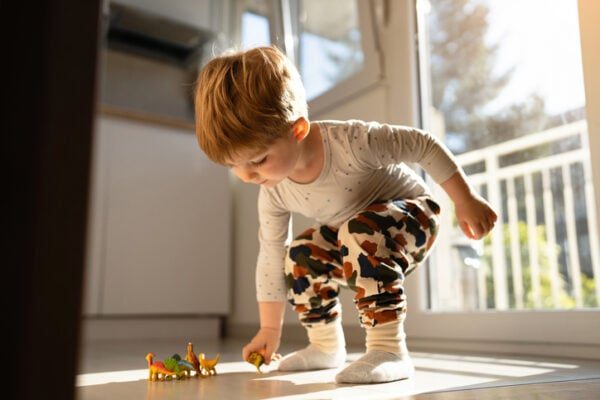
Her child was playing on the kitchen floor while sunlight poured through the windows, stretching across the tiles, catching in his hair as he laughed. His small hands moved from one toy to another, completely absorbed in the simplicity of the moment.
The sound of his laughter filled the room.
She watched him the way mothers do—present and distracted at once.
Watching his smile.
Watching the light move across his face.
Watching the rise and fall of his small shoulders as he breathed.
And for the first time, she noticed how fragile the moment felt.
How easily it could be taken away.
And then the ordinary disappeared.
One moment she was standing in her kitchen.
The next, her mind was somewhere else entirely—moving ahead, racing through futures she had never allowed herself to imagine before.
That is what cancer does.
It doesn’t arrive loudly. It slips quietly into ordinary life—into phone calls, into kitchens, into moments that were never meant to hold fear.
The dishes remain in the sink.
The laundry still waits to be folded.
Your child still reaches for you.
But your thoughts are no longer where your body is.
You begin measuring life differently.
Not in years.
Not in months.
But in moments.
Will I see my child start school?
Will I watch him grow older?
What if this has already spread?
What if this moment is one of the last ordinary ones?
In oncology, we often speak about diagnosis and treatment. But the waiting—the space between answers—can become its own kind of burden.
Because waiting is not empty.
It fills the quiet spaces.
It fills the moments between breaths, between tasks, between conversations—with questions, with fear, with imagined outcomes you cannot turn off.
In one reality, life continues.
Children laugh.
The sun still rises.
Dinner still needs to be made.
But inside, something shifts.
Another reality forms—one shaped by uncertainty, quiet fear, and the fragile hope that everything might still be okay.
She underwent the deeper excision and waited again.
Waiting to hear how deep the melanoma had gone.
Waiting to hear whether lymph nodes were involved.
Waiting to hear whether more treatment would be needed.
Waiting to hear what her life would look like next.
Time no longer moved the same way.
Days felt longer. Hours heavier. Even small moments stretched, filled with thoughts she could not quiet.
And yet outwardly, nothing about her had changed.
That is another truth about cancer: fear is often invisible.
Patients sit at dinner tables nodding along to conversations they barely hear. They smile when they are expected to smile. They continue caring for their families while carrying questions they are not ready to speak aloud.
Thankfully, her melanoma was fully excised.
But something inside her did not return to the way it was before.
Because once you hear the word melanoma, sunlight changes.
What once felt warm and effortless now carries memory.
Awareness.
A quiet, constant understanding of what it can take.
Not because of procedures or pathology reports.
But because behind every biopsy is a person standing in an ordinary moment, quietly wondering how much of life will remain unchanged.
Sometimes life does not change in the operating room.
Sometimes it changes in a quiet kitchen, while your child plays in the sunlight—
and you realize how quickly everything you thought was certain can become unknown.
—
iStock image
Publisher: Source link