

Dr. Katelin Holmes, DO, FACS, FACOS, is a board-certified, fellowship-trained breast surgical oncologist based in Fairhope, Alabama. She currently serves as Medical Director of Breast Surgical Services at Thomas Hospital, co-directs the NAPBC Breast Program, and holds a Clinical Assistant Professor appointment in UAB’s Department of Surgery. Holmes earned her DO with honors from the University of Pikeville, completed general surgery training in Texas, and pursued breast-focused rotations at MD Anderson and The West Clinic before a breast surgical oncology fellowship at OhioHealth Grant Medical Center. In 2025, she performed the first FDA-approved laparoscopic nipple-sparing mastectomy in the United States.
Scott Douglas Jacobsen interviews Dr. Katelin Holmes on breast tumor cryoablation, a minimally invasive technique that freezes selected breast cancers under ultrasound guidance instead of surgically removing them. Holmes explains that the office-based procedure usually takes about 30 minutes, uses local anesthetic, and allows same-day discharge. She emphasizes that cryoablation fits only carefully selected older patients with small, hormone-driven, low-risk tumors, not larger or biologically aggressive cancers. Holmes also discusses the ICE3 trial, the role of endocrine therapy, imaging follow-up after treatment, and the main barriers to wider adoption: physician awareness, reimbursement, institutional lag, and careful patient selection in practice.
Scott Douglas Jacobsen: What is breast tumor cryoablation?
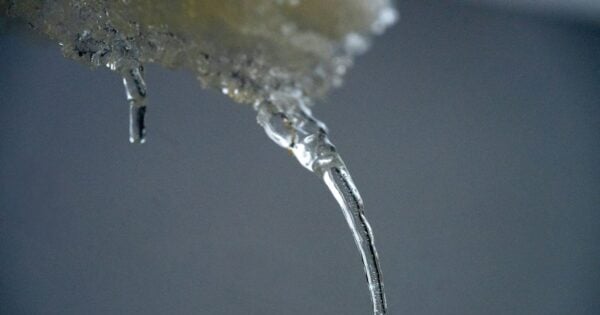
Katelin Holmes: Breast tumor cryoablation is a minimally invasive way to treat certain breast cancers by freezing the tumor rather than surgically removing it. A small probe is placed directly into the tumor using ultrasound guidance. That probe creates extremely cold temperatures that freeze and kill the cancer cells. Over time, the body naturally absorbs the treated tissue.
Jacobsen: How does an office-based procedure typically unfold?
Holmes: The experience is very different from traditional surgery. Patients come to the office much like they would for any imaging appointment. The area is numbed with local anesthetic, and ultrasound is used to guide the cryoablation probe directly into the tumor. Once the probe is in place, the freezing process begins. We watch the “ice ball” form around the tumor on ultrasound to make sure the entire cancer is treated. The entire procedure usually takes around 30 minutes, and a patient doesn’t even need an IV started! Patients are awake and comfortable during the procedure. Afterwards, they go home the same day. Most people return to normal activities quickly. From a patient perspective, it feels much closer to a biopsy than a surgery.
Jacobsen: An FDA authorization can narrowly define by indication. Who is the right patient, and who should not be considered?
Holmes: Cryoablation is not meant to replace surgery for everyone. Right now, the best candidates are patients are typically in their 70s or older, with small, slow-growing breast cancers that are hormone driven and biologically less aggressive that we can see well with ultrasound. The reason why we have started with this category of patients is because these types of cancers typically behave very predictably and respond well to hormone therapy and less aggressive approaches. Patients who are not good candidates include those with larger tumors, more aggressive cancer types such as triple-negative or HER2-positive disease, or cancers that are difficult to visualize with imaging. Like many advances in medicine, the key is matching the right treatment to the right patient rather than assuming one approach fits everyone.
Jacobsen: What did the ICE3 trial convincingly show?
Holmes: The ICE3 trial looked specifically at women over 60 with small, hormone-receptor positive breast cancers treated with cryoablation. What it showed was encouraging: very low rates of cancer returning in the treated area when patients were carefully selected. In other words, when the right patients are chosen, freezing the tumor can control the cancer locally in a way that’s comparable to surgery for that specific group. It’s an exciting, ground-breaking study, because it challenges the need for surgery in a disease that has essentially 100% always required surgery when treated curatively. I’m hopeful we can continue to explore how cryoablation may be used in other malignancies to de-escalate treatment.
Jacobsen: Cryoablation here is paired with adjuvant endocrine therapy. What do these mean individually and together?
Holmes: Cryoablation treats the tumor locally in the breast. Endocrine therapy treats the cancer biology by blocking or lowering estrogen, which is essentially cutting off the fuel sources for the types of tumors seen in ICE3. It’s a two-part strategy to get control of the mothership (the tumor) and any satellite cells (with endocrine therapy).
Jacobsen: Clinically, how central is endocrine therapy to outcomes?
Holmes: Endocrine therapy is extremely important. Many of the breast cancers considered for cryoablation are estrogen-driven tumors, meaning estrogen acts like fuel for them. Blocking that fuel significantly lowers the risk of recurrence. Even for patients who undergo traditional surgery for these types of cancers, endocrine therapy is almost always recommended for the same reason.
Jacobsen: What does follow-up look like after cryoablation?
Holmes: We monitor patients closely with follow up imaging like mammograms, ultrasounds, and sometimes MRI. It’s normal for the treated spot to remain visible on imaging for a while, similar to a scar. Radiologists become familiar with the expected changes after cryoablation, which helps us track healing and ensure everything looks stable. Patients also continue routine follow-ups with their cancer care team. In many ways, the follow-up is similar to what patients already experience after traditional lumpectomy surgery.
Jacobsen: What are the biggest barriers to broader adoption in the U.S.?
Holmes: The biggest barrier is awareness. Many patients and even physicians simply don’t know this option exists yet. Surgical treatment has been the standard for decades, so new approaches take time to enter mainstream practice. It’s challenging decades of dogma that surgery is the only chance at a cure. Another challenge is that innovations in medicine often move faster than insurance systems. Reimbursement pathways and institutional adoption sometimes lag behind the science. It’s important for insurance companies to ensure this is a covered procedure so that patients don’t have to pay out of pocket. Finally, careful patient selection is critical. Cryoablation works best in very specific situations, so expanding its use requires education and thoughtful guidelines to ensure it is offered appropriately.
Jacobsen: Thank you very much for the opportunity and your time, Katelin.
For more information on Holmes:
https://www.linkedin.com/in/katelin-holmes-do-facs-facos-058a0348/
https://www.infirmaryhealth.org/doctors/katelin-holmes-do/
—
Scott Douglas Jacobsen is a Writer-Editor for The Good Men Project with more than 1,800 publications on the platform. He is the Founder and Publisher of In-Sight Publishing (ISBN: 978-1-0692343; 978-1-0673505) and Editor-in-Chief of In-Sight: Interviews (ISSN: 2369-6885). He writes for International Policy Digest (ISSN: 2332–9416), The Humanist (Print: ISSN, 0018-7399; Online: ISSN, 2163-3576), Basic Income Earth Network (UK Registered Charity 1177066), Humanist Perspectives (ISSN: 1719-6337), A Further Inquiry (SubStack), Vocal, Medium, The New Enlightenment Project, The Washington Outsider, rabble.ca, and other media. His bibliography index can be found via the Jacobsen Bank at In-Sight Publishing. He has served in national and international leadership roles within humanist and media organizations, held several academic fellowships, and currently serves on several boards. He is a member in good standing in numerous media organizations, including the Canadian Association of Journalists, PEN Canada (CRA: 88916 2541 RR0001), and Reporters Without Borders (SIREN: 343 684 221/SIRET: 343 684 221 00041/EIN: 20-0708028), and others.
***

If you believe in the work we are doing here at The Good Men Project and want a deeper connection with our community, please join us as a Premium Member today.
Premium Members get to view The Good Men Project with NO ADS. Need more info? A complete list of benefits is here.
—
Photo by Julia Taubitz on Unsplash
Disclaimer: This story is auto-aggregated by a computer program and has not been created or edited by healthlydays.
Publisher: Source link